
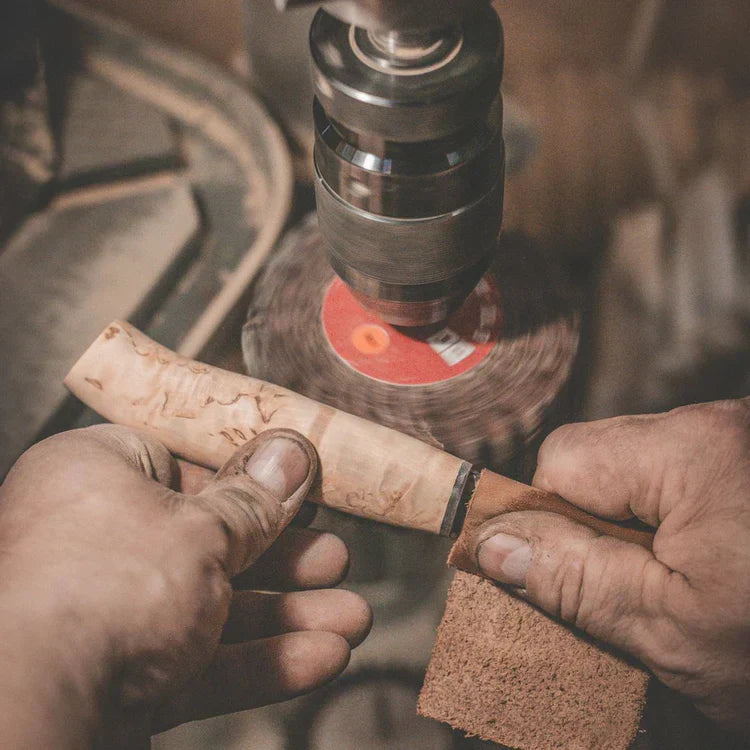
Curly Birch Roselli Knife Handles: Why Small Cracks, Pores, and Tiny Holes Are Normal
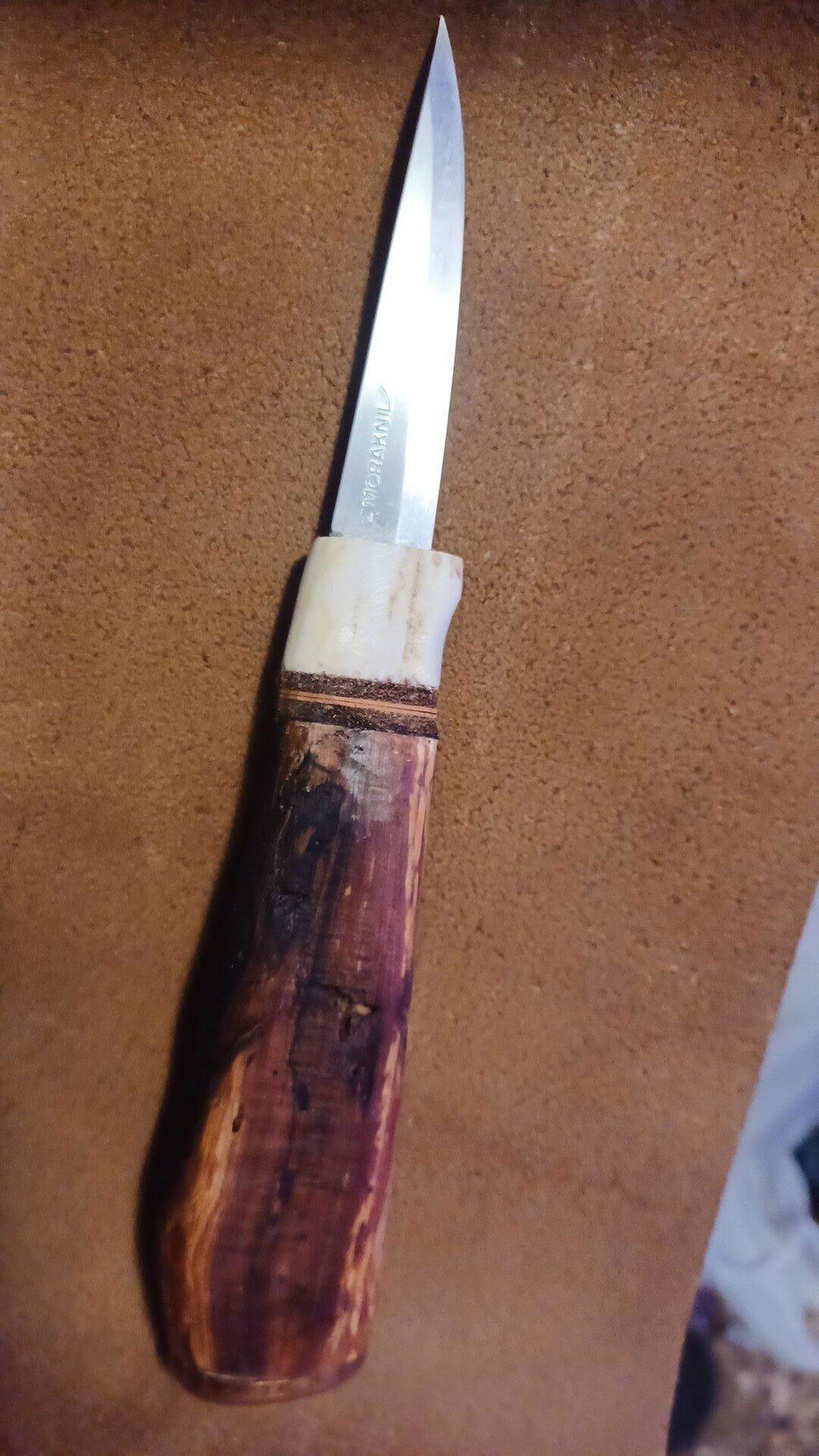
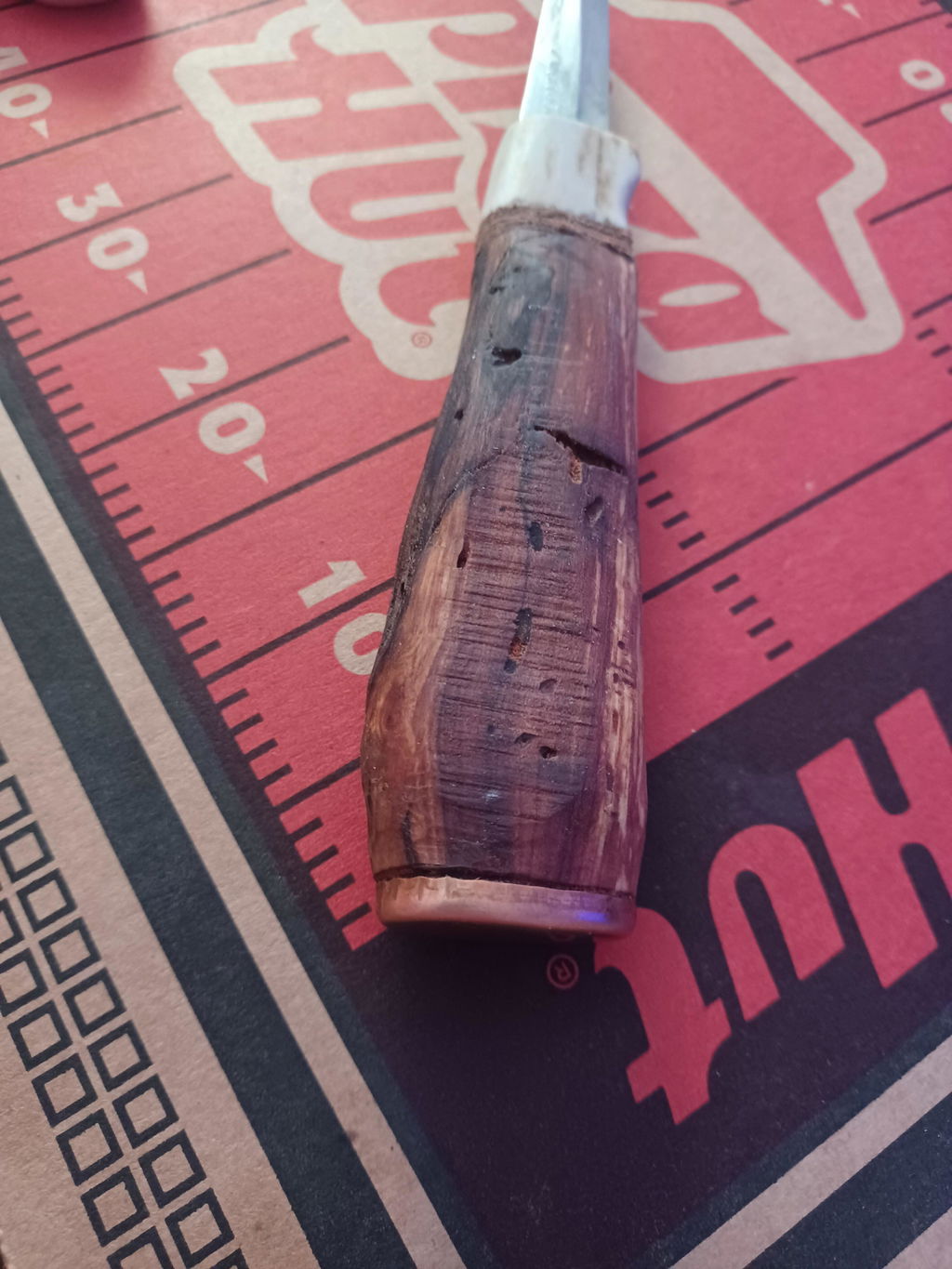
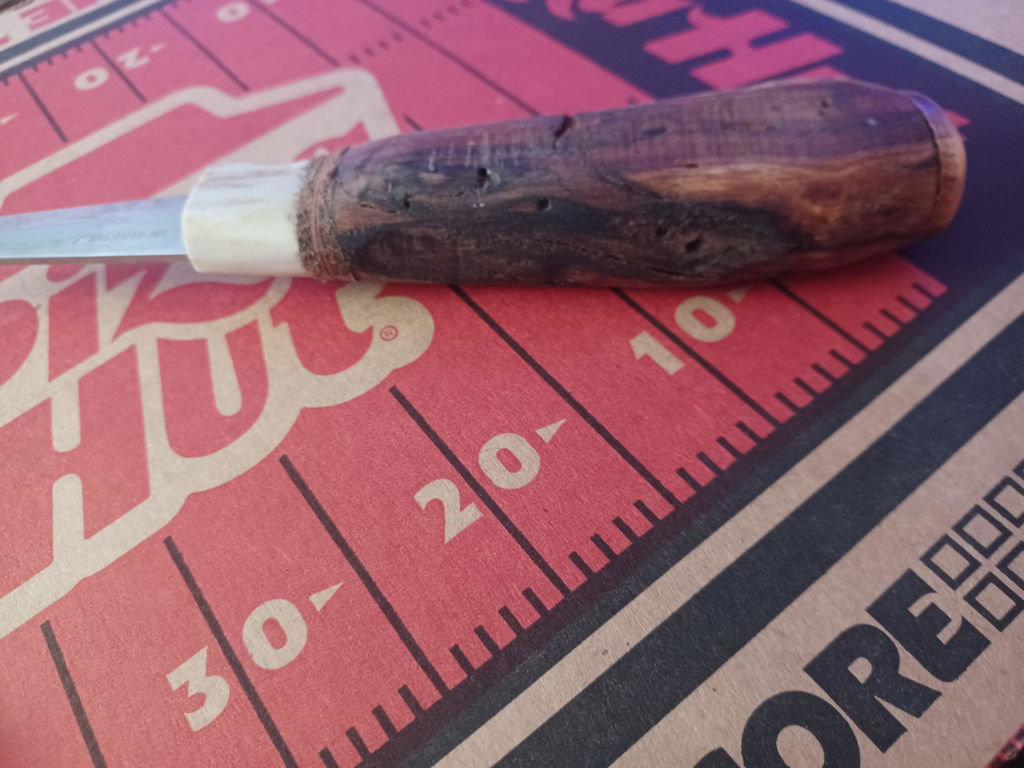
If you own a Roselli knife with a curly birch handle, you might notice something that looks like a problem at first: small cracks, pores, or tiny holes in the wood. Some people describe it as the handle “curling” or “splitting.”
In most cases, this is normal for premium curly birch. It is part of what makes curly birch so sought-after for knife handles in the first place. The same dramatic, marbled figure that makes the handle beautiful can also come with natural surface character.
Want to browse what we carry? Start here: Shop Roselli at Ragweed Forge.
Quick answer
Small surface cracks, pores, and tiny holes are common natural characteristics in premium curly birch. They are typically surface-level and do not impact handle performance. With simple care, curly birch handles hold up for years and develop an even better feel over time.
What people usually mean by “curling”
When customers say a curly birch handle is “curling,” they usually mean one of these things:
- The grain looks wavy or rippled. This is the “curly” figure (the marbling), not the handle bending.
- Small surface cracks. Often following the grain and figure of the wood.
- Tiny pores or pinhole-like openings. Small natural openings in the wood’s surface.
Curly birch is chosen because it looks alive and one-of-a-kind, not because it looks uniform. Two Roselli knives can be the same model and still feel different in hand. That is part of the appeal.
Why curly birch can have small cracks
Curly birch is known for intense, irregular marbling. In highly figured pieces, the wood’s fiber direction varies more. That variation can sometimes show up as minor surface cracks.
The important point: these cracks are typically superficial. They are part of the character of the material, not a sign that the handle is failing.
Why curly birch can have pores and tiny holes
Curly birch (Betula pendula var. carelica) is a mutation of silver birch and it grows irregularly with folds, knots, and dense, twisted grain. That unique growth pattern can create small pores and holes in the wood.
Common reasons you might see pores or small holes include:
- Irregular growth and cell formation that can leave tiny pores
- Small air pockets or empty spaces within the wood’s cellular structure
- Natural density variation in dense, twisted grain
Curly birch is prized for these decorative patterns and is used in knife handles, furniture, and instrument crafting for a reason. The look is special because the material is not uniform.

Does this affect durability or performance?
In normal cases, no. Small cracks, pores, and holes do not affect handle functionality. Curly birch is a practical handle material, and these natural surface features are not the same thing as structural failure.
When to reach out (rare, but worth knowing)
Natural character is normal. If you ever see something that feels clearly beyond normal surface variation, contact us. The simplest way is to send a clear photo in natural light.
Reach out if you notice things like:
- A crack that appears deep or is rapidly changing over time
- The handle feels loose or shifts in the hand
- Sharp splintering that affects comfort or safe use
How to care for a curly birch handle
Wood reacts to temperature and humidity changes. The goal is to avoid extremes and keep the handle’s moisture balance stable.
1) Oil or wax occasionally
Apply a small amount of linseed oil or beeswax occasionally. Rub it in, then wipe off any excess. This helps maintain the wood’s moisture balance and keeps the handle looking its best.
2) Avoid soaking and extreme conditions
Do not leave the knife sitting in water for long periods, and avoid exposing it to extreme temperatures. If the handle gets wet, dry it before storing the knife.
3) Let it gain character
A curly birch handle is meant to age. With use, it can develop a smoother feel and a richer look. That is not damage. It is what makes natural materials worth owning.

Why this “imperfection” is actually a reason to buy curly birch
If you want a handle that looks identical from knife to knife, a synthetic handle is a better choice. Curly birch is different. It is chosen because every piece has its own pattern, texture, and personality.
Those small pores or tiny surface cracks are often proof you are holding a real, highly figured piece of wood, not something engineered to look perfect. For many Roselli owners, that individuality is exactly what makes the knife worth buying and worth keeping.
Roselli knives with curly birch handles
Here are a few Roselli options we carry that feature curly birch handles:
- Roselli R112 Carving Knife (stained curly birch)
- Roselli R113 Carving Knife, short blade (stained curly birch)
- Roselli Heimo 4” Bushcraft Edition with Firesteel (stained curly birch)
See the full lineup here: Shop Roselli at Ragweed Forge.

FAQ: Curly birch handle cracks, pores, holes, and “curling”
Are small cracks normal in a curly birch knife handle?
They can be. In highly figured curly birch, fiber direction varies more, and minor surface cracks can appear. These are typically superficial.
Are pores and tiny holes normal in curly birch?
Yes, they can be. Curly birch grows irregularly with dense, twisted grain, and that natural growth pattern can create small pores and tiny openings.
Does this mean my handle is weak?
In normal cases, no. These natural surface features do not affect handle functionality.
What should I use to care for a curly birch handle?
Linseed oil or beeswax applied occasionally is a simple, effective approach. Avoid soaking the handle or exposing it to extreme temperatures.
My handle looks different than the photos. Is that normal?
Yes. Curly birch is a natural material. Variation in grain, texture, and pattern is expected, and it is one of the reasons people choose curly birch.
1 comment
Vernon Daugherty
Over the years I have owned many knives, now I value hand crafted simple carbon steel and natural handle materials, light but sturdy. Over 3/4 pound ? Movie prop gadgets. Thank you for good products that fill the need.