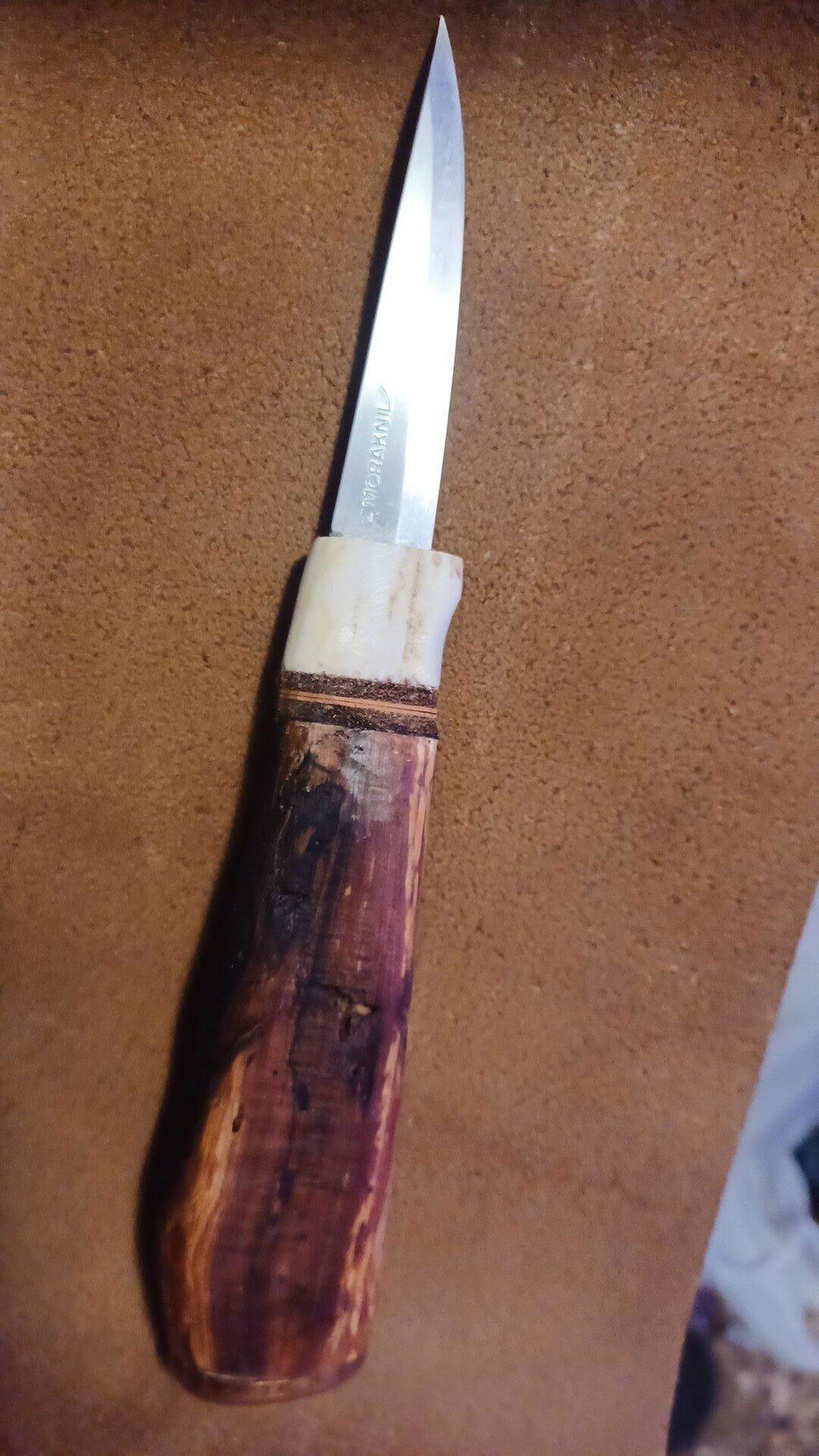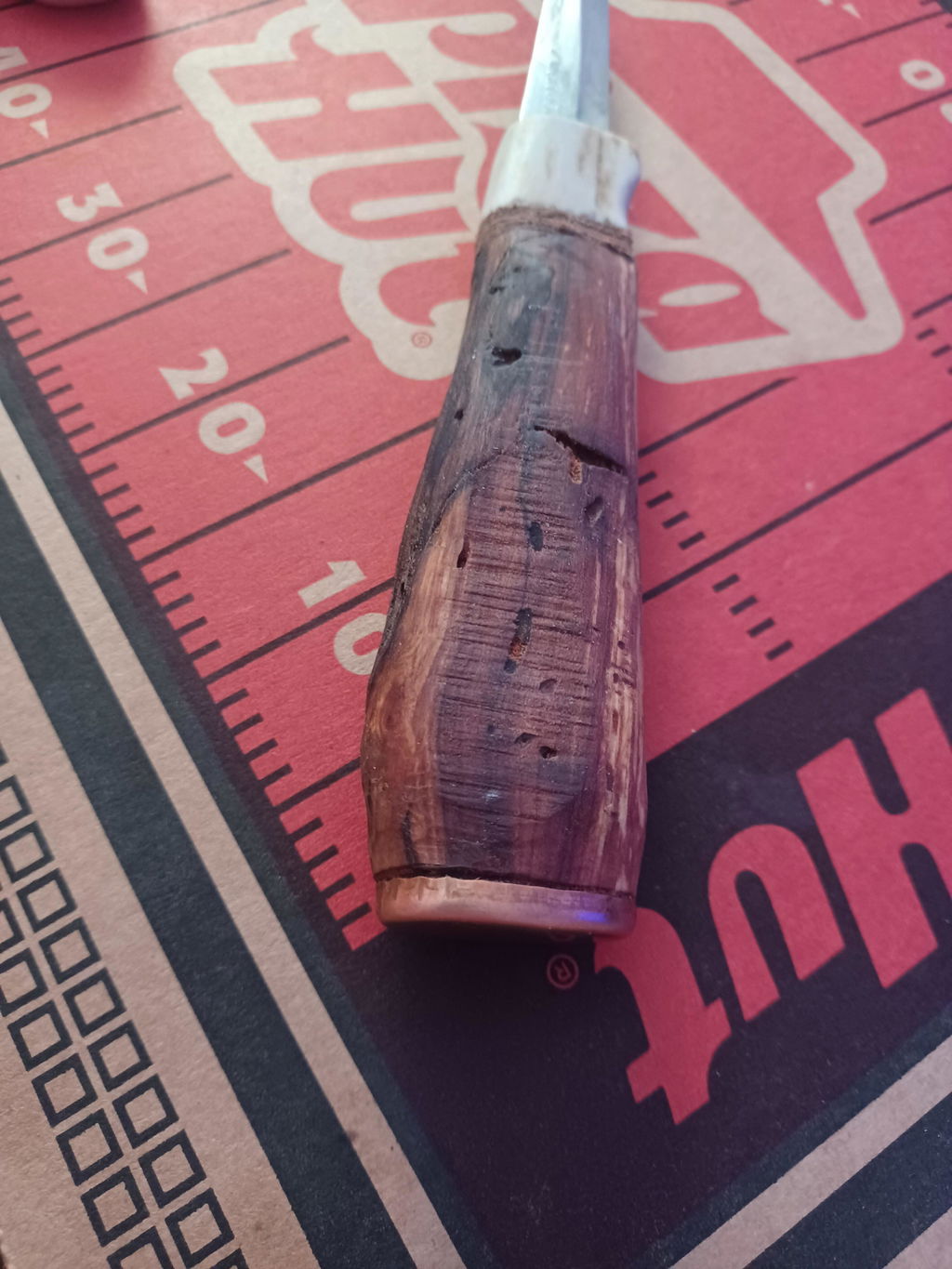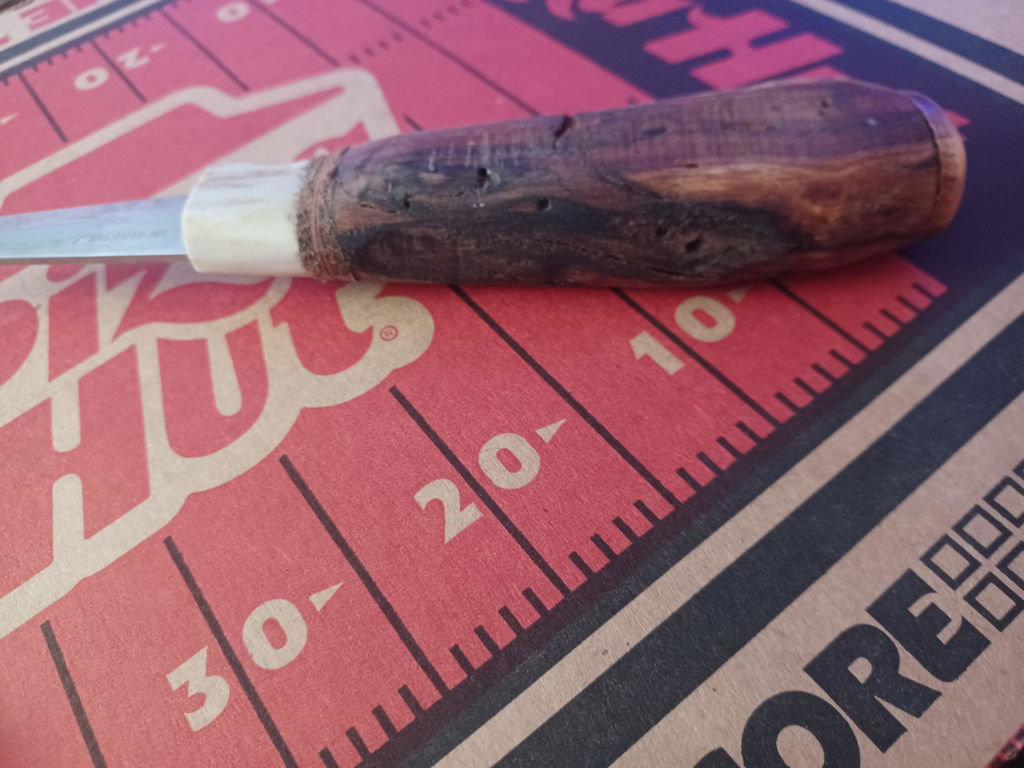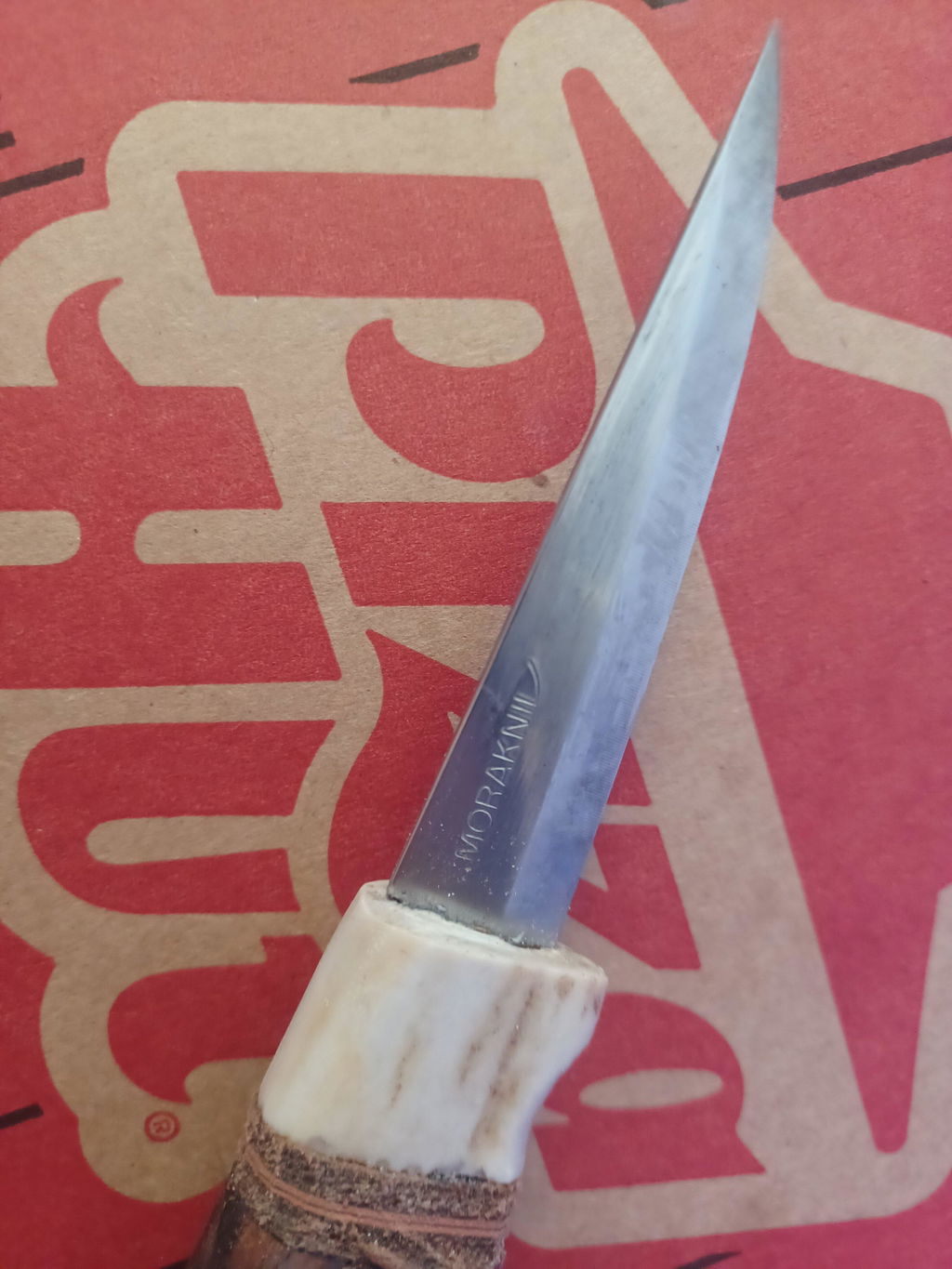
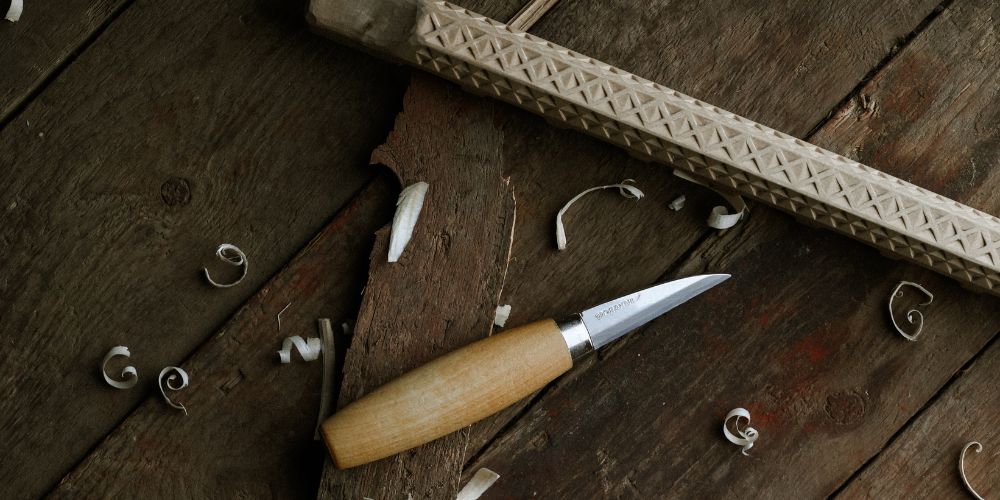
If you are getting into woodworking by hand, the terms whittling knife and carving knife can quickly become confusing.
They are often used interchangeably, and there is plenty of overlap. A good Scandinavian carving knife can be an excellent whittling knife, while many knives sold specifically for whittling are simply compact carving knives designed for controlled cuts.
The real difference is less about the name printed on the package and more about the kind of work the knife is designed to do.
If you are trying to choose your first tool, understanding blade length, shape, thickness, grind, and handle design will tell you far more than whether a knife is labeled “whittling” or “carving.”
You can compare traditional Nordic options in the Ragweed Forge carving knife collection.
What is a whittling knife?
Whittling generally refers to shaping wood with a knife, often with relatively simple cuts and minimal additional tools.
You might whittle a tent stake around the campfire, shape a small animal from basswood, carve a walking stick, make a simple utensil, or simply remove material from a piece of wood until a form begins to emerge.
Because of that, a good whittling knife is usually straightforward.
It needs to be sharp, comfortable, easy to control, and versatile enough to make both longer slicing cuts and smaller detail cuts.
Traditional Scandinavian knives are particularly well suited to this kind of work. Their relatively simple blade shapes and easy-to-follow bevels allow the user to control exactly where the cutting edge enters the wood.
Models such as the Mora Carving #106 demonstrate the basic idea well: a compact blade, comfortable handle, and geometry designed specifically for wood carving.
For more background on selecting and buying this type of tool, see our guide to quality whittling knives online.
What is a carving knife?
“Carving knife” is a broader term.
A carving knife can be used for whittling, but wood carving also includes more specialized work such as spoon carving, figure carving, chip carving, sloyd, kuksa carving, and detailed woodworking.
Different carving tasks can require very different blades.
A general carving knife may have a straight or slightly curved edge for controlled slicing cuts. A detail knife may use a shorter blade so the cutting edge stays close to the hand. A hook knife uses a curved blade to hollow bowls, spoons, and other concave surfaces.
That means someone building a complete carving kit may eventually own several different knives, even though a beginner can do a surprising amount of work with one good straight carving knife.
The Mora carving collection includes straight carving knives, hook knives, carving blades, and related woodworking tools designed around these different tasks.
So is there actually a difference?
Yes, but the boundary is not strict.
Whittling describes an activity. Carving describes both an activity and a larger category of woodworking.
A knife designed for general wood carving will often work extremely well for whittling. A highly specialized carving knife, however, may not.
A hook knife is an obvious example. It is a carving knife, but you would not choose one as your only knife for general whittling.
Likewise, an extremely short detail knife may be excellent for small decorative cuts but inefficient when you need to remove larger amounts of wood.
For someone buying a first knife, a traditional straight carving or sloyd-style knife usually provides the most useful middle ground.
Why blade length matters
Longer is not necessarily better for carving.
A relatively short blade keeps the cutting edge close to your hand. That can improve control when making precise cuts and makes it easier to judge exactly where the blade will exit the wood.
Longer blades remove material efficiently and can be useful for larger projects, but they require more awareness during close work.
Many traditional Nordic carving knives fall somewhere around the range where they are long enough for efficient slicing but compact enough for controlled carving.
If you prefer especially close control, a purpose-built option such as the Roselli R112 Carving Knife combines a compact carbon steel blade with a Scandinavian grind designed around woodwork.
Blade thickness and geometry matter too
A thick outdoor knife can certainly carve wood, but that does not automatically make it a good carving knife.
As the blade moves through wood, the material behind the cutting edge affects how easily the knife turns, slices, and follows the grain. A carving-oriented blade generally places more emphasis on cutting efficiency than on the heavy construction found in some survival knives.
This is one reason Scandinavian knives have remained popular among woodworkers.
The familiar Scandi-style bevel provides a keen cutting geometry while also giving the user a large, visible bevel that can help guide the knife during both carving and sharpening.
If you are comparing different options, our guide on how to choose a durable wood carving knife takes a closer look at steel, edge retention, handles, and construction.
What about the handle?
Carving involves repeated controlled cuts, so handle comfort matters more than many beginners expect.
A handle that feels acceptable for a few quick cuts can become uncomfortable after an hour of carving.
Look for enough handle length to support several grips without forcing your hand into one position. Rounded wooden handles are common on Scandinavian carving knives because they allow the knife to rotate naturally in the hand.
The handle should not require a tight grip to control the blade.
That becomes especially important when making repetitive cuts. More grip pressure usually means more fatigue, and more fatigue generally means less control.
Carbon steel or stainless steel?
Both can work very well.
Carbon steel is extremely common in traditional carving knives because it can take a very keen edge and is generally straightforward to maintain with appropriate sharpening equipment.
The tradeoff is corrosion resistance. Carbon steel should be wiped clean and dry after use and should not be stored wet.
Stainless steel requires less attention around moisture and can make sense if you carve outdoors frequently or simply prefer lower-maintenance tools.
For carving performance, however, geometry and sharpness usually matter more than choosing one steel category over the other.
Do you need a special knife to start whittling?
You do not need a large collection.
One comfortable, sharp straight carving knife is enough to learn a wide range of basic cuts.
Start with simple projects that teach blade control: stakes, wooden spatulas, small figures, feather sticks, or basic utility objects.
As you gain experience, your projects will tell you what additional tools make sense.
If you begin carving spoons, a hook knife becomes useful. If you start working on small figures, you may want a shorter detail blade. If you regularly rough out large blanks, you may want a larger carving knife or another woodworking tool for removing bulk material.
That is a much better way to build a carving kit than buying every specialized blade at the beginning.
Whittling knife or carving knife: which should you buy?
If you are mainly interested in relaxed whittling and small woodworking projects, choose a compact straight carving knife with a comfortable handle.
If you already know you want to make spoons, bowls, kuksas, or detailed carvings, start with the straight knife but expect to add more specialized tools as your skills develop.
The important thing is not the label.
Choose a knife designed to cut wood efficiently, keep it sharp, and learn how the blade reacts to grain direction.
A well-designed Scandinavian carving knife can take you from your first basic whittling project to years of serious woodworking.
Explore carving knives and woodworking tools at Ragweed Forge.
How to choose a carving knife for beginners
Your first carving knife does not need to be complicated.
In fact, a beginner usually learns faster with one simple, well-designed knife than with a large set of specialized tools.
The goal is to find a knife that is easy to control, comfortable in the hand, straightforward to sharpen, and suited to the type of projects you actually want to make.
That could mean carving simple figures from basswood, making tent stakes and camp utensils, learning traditional Scandinavian sloyd, or eventually moving into spoon and kuksa carving.
Ragweed Forge carries a wide selection of Scandinavian carving knives, ranging from accessible beginner tools to handmade Finnish carving knives.
Here is what matters when choosing your first one.
Start with a straight carving knife
For most beginners, the best first carving knife is a conventional straight knife rather than a specialized blade.
A straight carving knife teaches the fundamental cuts used across many forms of wood carving. You can use it to shape a blank, make long slicing cuts, create points and curves, carve notches, refine edges, and perform a surprising amount of detail work.
Specialized tools become valuable later.
A hook knife is excellent for hollowing a spoon bowl. A tiny detail knife gives you more control in very tight areas. Gouges and chisels expand what you can create.
But none of them replaces the usefulness of a good straight carving knife.
Choose a manageable blade length
Beginners sometimes assume that a larger knife will be more versatile.
For carving, the opposite can often be true.
A compact blade is easier to control because the active part of the cutting edge remains relatively close to your hand. That makes it easier to follow a line and understand how small movements of the wrist affect the cut.
For many beginners, a blade somewhere around a few inches long provides a useful balance between control and cutting efficiency.
The Mora Carving #120 Carbon is a good example of this approach. Its compact carbon steel blade is intended specifically for carving, and the generously sized birch handle provides plenty of surface to grip.
The Mora Carving #106 provides another traditional Scandinavian option with a slightly longer carving blade.
Look for a comfortable handle
The handle may matter even more than the blade during long carving sessions.
You will use several different grips as you carve. Sometimes the knife is held normally. Sometimes the thumb supports the back of the blade or handle. In other cuts, the knife rotates in your palm.
A highly sculpted handle can feel secure in one position but uncomfortable in another.
That is one reason traditional Scandinavian carving knives often use relatively simple wooden handles. The rounded shapes allow the knife to move naturally through different grips without forcing your hand into a fixed position.
Choose a handle that fills your hand without making you squeeze excessively.
If your hand is already tiring after a few minutes, the knife is either a poor fit, too dull, or being used with too much force.
A sharp knife is easier to control
Beginners sometimes feel safer with a slightly dull knife.
In practice, a dull carving knife often requires more force. More force makes a cut harder to stop and encourages the user to push through the wood rather than slice it cleanly.
A sharp carving knife should remove thin shavings with controlled pressure.
Learning to maintain that edge is therefore part of learning to carve.
Scandinavian grinds are especially useful for beginners because the broad bevel creates a clear reference surface during sharpening. The bevel can be placed against a suitable stone or plate, helping the user maintain a consistent angle.
Before your knife becomes noticeably dull, touch up the edge and strop it regularly. Small maintenance sessions are much easier than repairing a badly neglected edge.
Our guide to sharpening knives and choosing sharpening tools is a useful companion when you are building your first carving setup.
Carbon steel is a classic choice for carving
Many traditional carving knives use carbon steel.
There are good reasons for that. Carbon steel can take a very fine edge, responds well to normal sharpening methods, and has been used successfully in woodworking knives for generations.
The main requirement is basic maintenance.
Do not leave a carbon steel carving knife damp. Wipe the blade clean after use, dry it before storage, and apply appropriate protection if the knife will sit unused for an extended period.
If you would rather spend less time thinking about corrosion, stainless carving knives are also available.
Mora, for example, offers both carbon and stainless carving tools in its wood carving collection.
Neither steel automatically makes you a better carver. A sharp knife with good geometry and a comfortable handle matters more.
Do not start with an oversized bushcraft knife
A strong bushcraft knife may be capable of carving, but a knife designed primarily for batoning, shelter construction, or other demanding camp work can feel clumsy during detailed wood carving.
Thicker blade stock creates more resistance as the blade moves through wood. Larger handles and longer blades can also make precise cuts more difficult.
If wood carving is the main goal, buy a knife designed around cutting wood rather than trying to make one heavy outdoor knife handle every job.
You can always add a separate camp or bushcraft knife later.
What should your first carving projects be?
Choose projects that allow you to practice controlled cuts without needing many specialized tools.
Simple wooden stakes are excellent because they teach long slicing cuts and point formation. Basic butter spreaders or spatulas introduce curves and transitions. Small figures teach you to remove wood gradually instead of trying to reach the final shape in a few cuts.
Basswood is popular with beginners because it is relatively easy to carve, but green birch and other woods can also be enjoyable once you begin understanding grain direction.
The important thing is to pay attention to how the wood reacts.
If a cut suddenly digs deeper, tears out a large chip, or requires much more pressure, look at the grain before pushing harder.
Learning to read wood is just as important as learning to hold the knife.
When should you add a hook knife?
Once you begin making spoons, cups, or other hollow forms, a hook knife becomes useful.
Hook knives are designed to cut concave surfaces that a straight knife cannot reach efficiently.
They should normally be treated as a second carving knife rather than a replacement for your main straight blade.
The Mora carving collection includes both straight knives and hook knives, making it easy to build a carving kit gradually as your projects become more complex.
Moving up to a handcrafted carving knife
An affordable Mora is enough to learn carving and can remain useful for decades.
Some carvers eventually want a more traditional handcrafted tool with premium natural materials and a different feel in the hand.
The Roselli R112 Carving Knife takes that approach with a carbon steel blade, Scandi Grind Zero geometry, curly birch handle, and Finnish leather sheath.
Ragweed Forge also carries carving tools from makers including Wood Jewel and Kauhavan Puukkopaja for carvers who want to explore Finnish knife traditions beyond their first beginner knife.
The best beginner carving knife is one you will use
Do not become trapped comparing every steel, blade thickness, and hardness number before you begin.
Choose a manageable straight blade. Make sure the handle fits your hand. Learn to keep the edge sharp.
Then start carving.
After a few projects, you will understand far more about what you need from your next knife than any specification sheet could teach you.
Browse the complete Ragweed Forge carving collection to compare beginner carving knives, traditional Scandinavian models, hook knives, and more specialized woodworking tools.