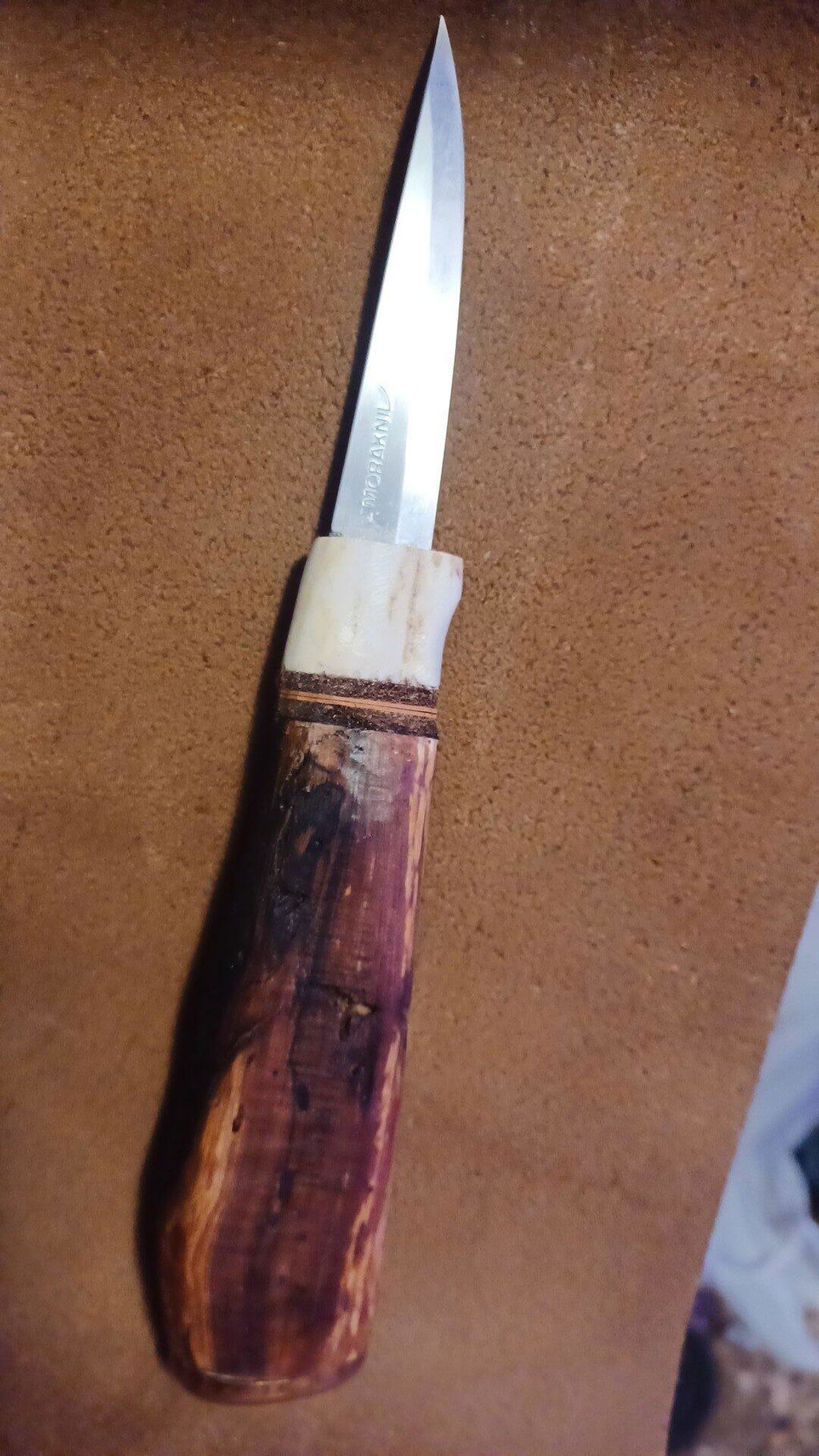
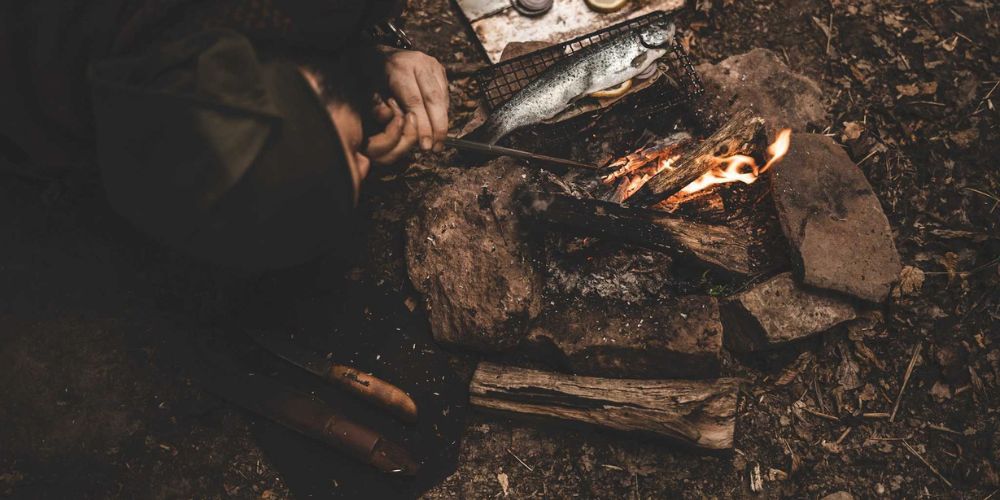
The best puukko for most buyers is a carbon-steel blade of 8–9 cm with a birch handle, from an established Finnish maker. Start there, and adjust only if your use calls for something else.
The puukko is Finland's traditional all-purpose belt knife. For centuries it was the one tool a Finn carried every day: for carving, cleaning fish, splitting kindling and cutting bread. It is still a common gift for graduations, confirmations and milestone birthdays.
What makes it special is simplicity. A single-edged blade, a handle with no finger guard and a deep sheath that holds the knife securely. This guide walks you through each choice so you buy a knife you will use for decades.
Anatomy of a puukko
Knowing the five main parts makes product descriptions much easier to read.
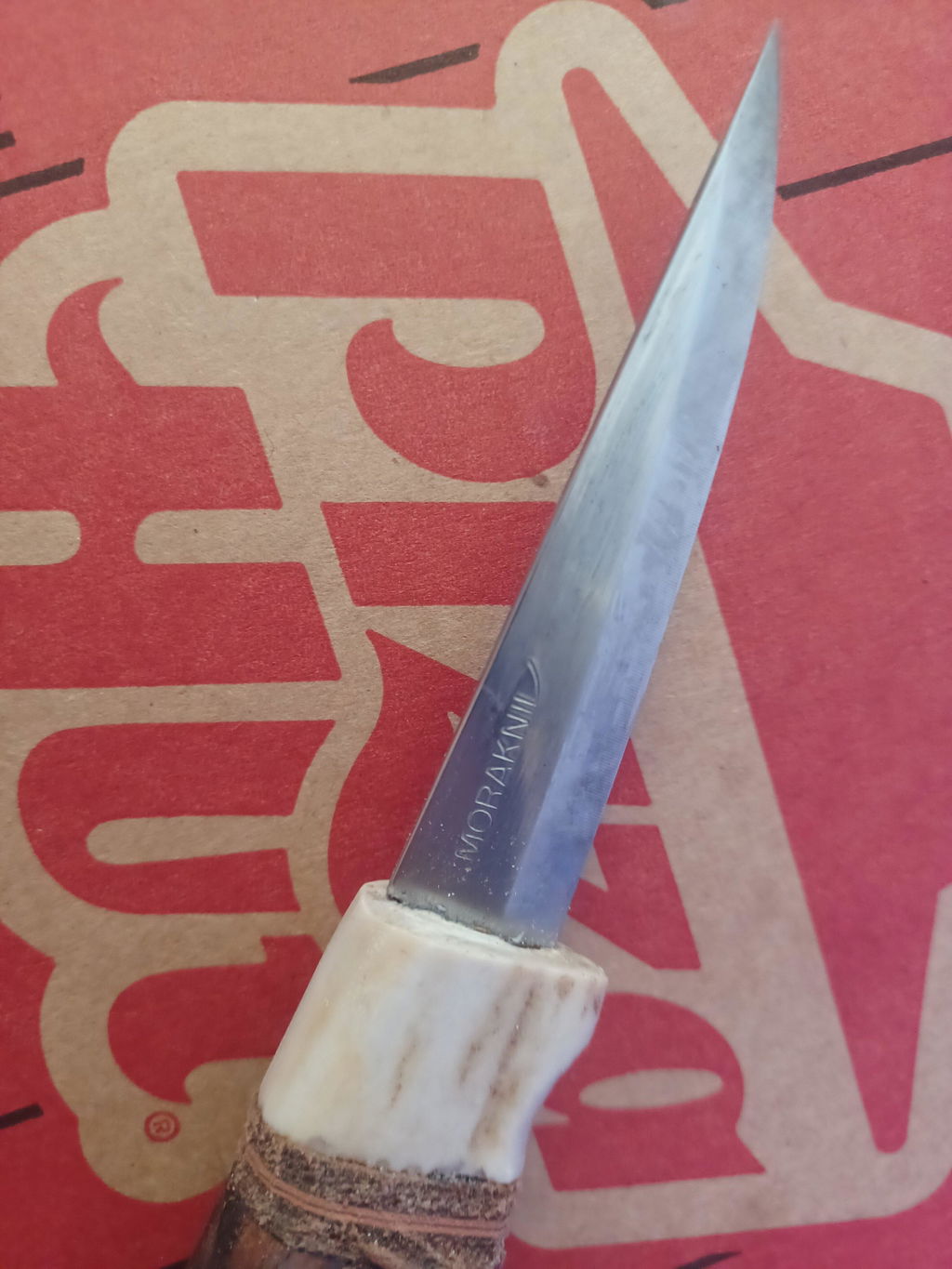
- Blade: Single-edged with a straight spine. The traditional grind is the Scandi grind: one wide bevel down to the edge, with no secondary bevel. It is easy to sharpen and bites well into wood.
- Tang: The part of the blade inside the handle. Most puukkos have a stick tang (a narrow rod through the handle), often peened over at the end. It is traditional, light and more than strong enough for normal use.
- Handle: Usually wood, oval in cross-section and without a finger guard. The shape lets you shift grip freely while carving.
- Bolster and end cap: Metal fittings at the front and back of the handle, often brass or nickel silver. They protect the wood and add character.
- Sheath: Typically leather with a wooden or plastic insert. A good puukko sheath holds the knife by friction, deep enough that the handle sits partly inside it.
Blade steel: carbon, stainless or laminated
Choose carbon steel if you want the traditional feel and easy sharpening; choose stainless if you want low maintenance.
|
Steel type |
Sharpening |
Rust resistance |
Maintenance |
Best for |
|
Carbon steel (e.g. 80CrV2, 1095) |
Very easy, takes a keen edge |
Low, develops a patina |
Dry and oil after use |
Woodcraft, bushcraft, traditionalists |
|
Stainless steel (e.g. 12C27, 14C28N) |
Easy |
High |
Minimal |
Fishing, kitchen, damp conditions |
|
Laminated steel (hard core, softer outer layers) |
Easy, edge holds well |
Depends on layers |
Moderate |
Buyers wanting top performance and looks |
A dark patina on carbon steel is normal and actually protects against red rust. Many puukko owners see it as a sign of a well-used knife. Hardness is usually listed as HRC; around 58–60 HRC is a good balance of edge retention and toughness for a puukko.
Blade length and shape
For a first puukko, 8–9 cm is the sweet spot: long enough for camp chores, short enough for precise carving.
|
Blade length |
Typical use |
Notes |
|---|---|---|
|
6–8 cm |
Carving, whittling, small detailed tasks |
Excellent control; also popular as a gift knife |
|
8–10 cm |
General outdoor use, camping, food prep |
The classic all-rounder |
|
10–12 cm |
Fishing, hunting, heavier camp work |
More reach for cleaning fish and game |
|
12 cm and up |
Batoning wood, large game |
Moving toward leuku territory (the larger Sami knife) |
Shape matters too. A straight edge with a slightly raised point is the classic profile for woodwork. A blade with more belly (a curved edge) is better for skinning and slicing. Fishing knives are often thinner and more flexible.
Handles and sheaths
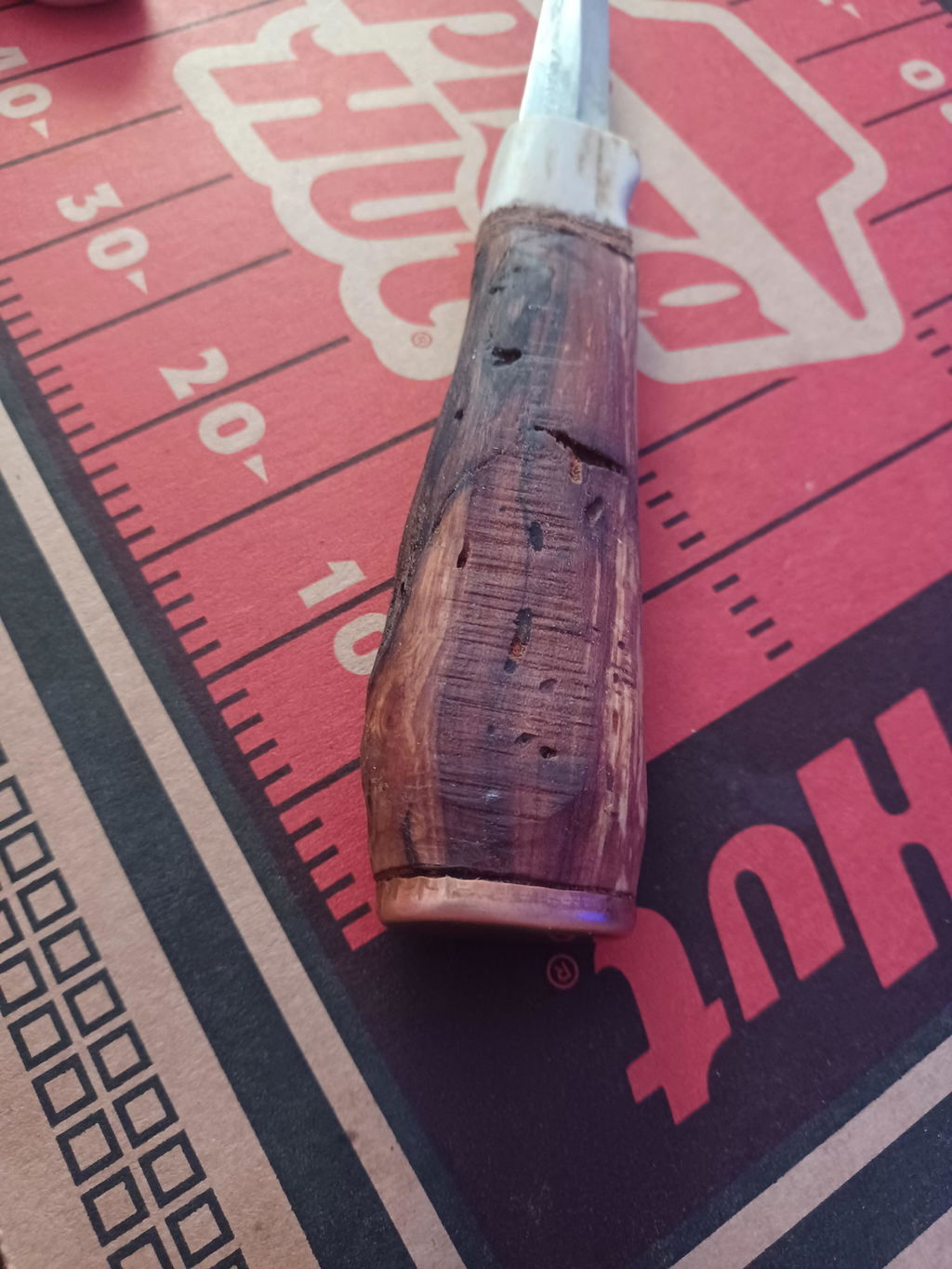
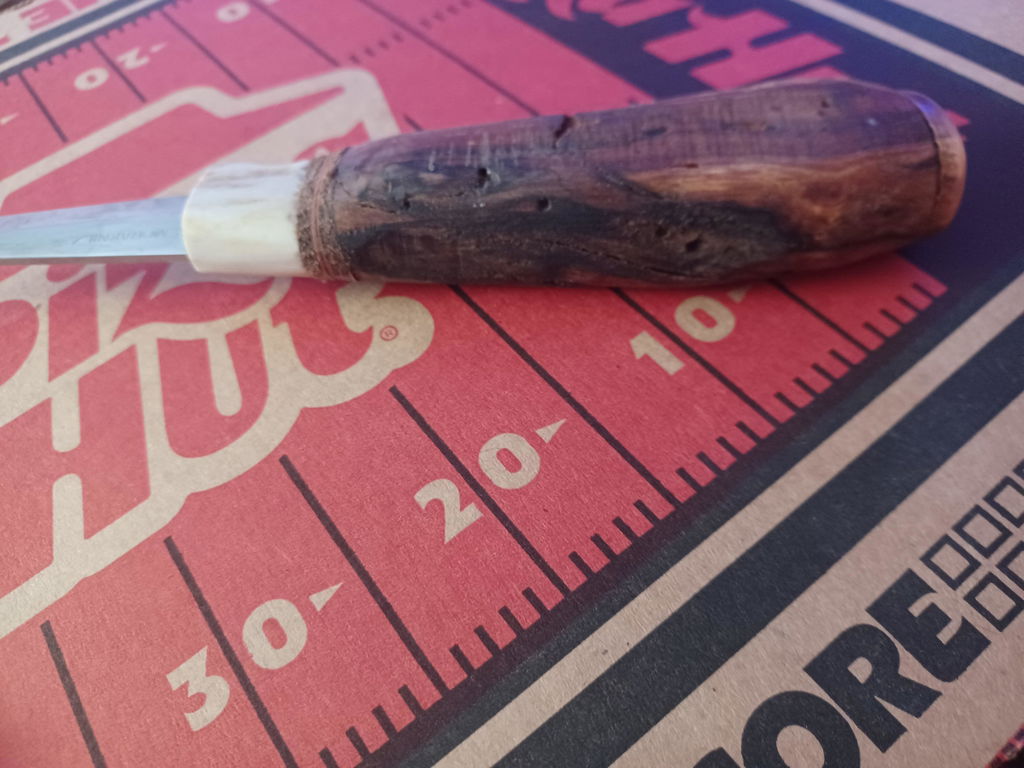
Curly birch (visakoivu) is the classic handle material, prized for its beautiful grain and resistance to cracking.
- Curly birch: Traditional, warm in the hand, gets better looking with age. The most common choice on quality puukkos.
- Stacked birch bark: Rings of compressed bark. Grippy even when wet, light and very comfortable. Ideal for fishing.
- Reindeer antler: Often combined with wood in Lapland-style knives. Decorative and durable, usually at a higher price.
- Synthetic (plastic, rubber): Inexpensive, hygienic and maintenance-free. Good for fishing and hard daily use.
Check the handle size against your hand. A puukko handle has no guard, so it should fill your grip comfortably without your fingers sliding forward.
For the sheath, look for thick leather with an insert that protects both the stitching and you. The knife should click firmly into place and not fall out when turned upside down. A dangler-style belt loop lets the sheath move freely, which is more comfortable when sitting or skiing.
Factory-made or handmade?
A factory puukko from a respected Finnish maker gives the best value; a handmade one gives you a unique piece with the maker's signature.
Factory knives are consistent, affordable and easy to replace. Handmade knives by individual smiths often use forged or laminated blades, carefully chosen birch and hand-stitched sheaths. Many smiths also take custom orders, though wait times can be long.
Well-known Finnish makers to start your search:
|
Maker |
Home region |
Known for |
|---|---|---|
|
Marttiini |
Rovaniemi, Lapland |
Wide range of affordable outdoor and fishing knives |
|
Iisakki Järvenpää |
Kauhava |
Traditional puukkos with long family history |
|
Kauhavan Puukkopaja |
Kauhava |
Classic Ostrobothnian designs, often with decorated fittings |
|
Roselli |
Harmoinen |
Carbon-steel woodcraft knives with a distinctive simple look |
|
Lauri |
Kauhava |
Blades widely used by DIY knife builders |
|
Fiskars |
Fiskars, Uusimaa |
Mass-market knives and tools |
Kauhava in Ostrobothnia is often called Finland's puukko capital, and many traditional workshops are based there.
How much should you spend?
Around €50–150 buys an excellent puukko that will last a lifetime. Prices below are approximate and vary by retailer.
|
Budget (approx.) |
What you get |
Good for |
|---|---|---|
|
Under €40 |
Factory knife, synthetic or plain wood handle, simple sheath |
First knife, fishing, a spare for the car or cabin |
|
€40–150 |
Quality steel, curly birch handle, leather sheath with insert |
Most buyers and most gifts |
|
€150–400 |
Small-workshop or handmade, laminated or forged blades |
Enthusiasts, special gifts |
|
€400 and up |
Master-smith or collector pieces, decorated fittings |
Collectors, heirloom gifts |
Care, sharpening and the law
A puukko needs only a few minutes of care to stay sharp and rust-free for decades.
- Wipe the blade dry after use, and oil carbon steel lightly with a food-safe oil.
- Never put a puukko in the dishwasher. Heat and moisture damage both the steel and the wooden handle.
- Treat a wooden handle with linseed oil or wax a few times a year.
- Store the knife outside the sheath if it is wet, so the leather and blade can dry.
The Scandi grind is the easiest edge to sharpen. Lay the wide bevel flat on a whetstone, so the stone itself sets the angle, and draw the blade along it. Finish with a few passes on a leather strop.
A note on the law: in Finland, carrying a knife in a public place requires an acceptable reason, such as work, hunting, fishing or a hike. Laws in other countries vary, so check your local rules before carrying a puukko in public.
Quick checklist before you buy
- Steel chosen: carbon for tradition, stainless for low maintenance
- Blade length matches your main use (8–9 cm if unsure)
- Handle fits your hand comfortably without a guard
- Sheath holds the knife firmly, with a protective insert
- Maker is reputable, or the smith's work is well reviewed
- You know the carrying rules where you live
A good puukko is not a trend purchase. Chosen well, it becomes the knife you reach for first, and one you may one day pass on. Browse our selection, and if you have questions, our team is happy to help you find the right one.