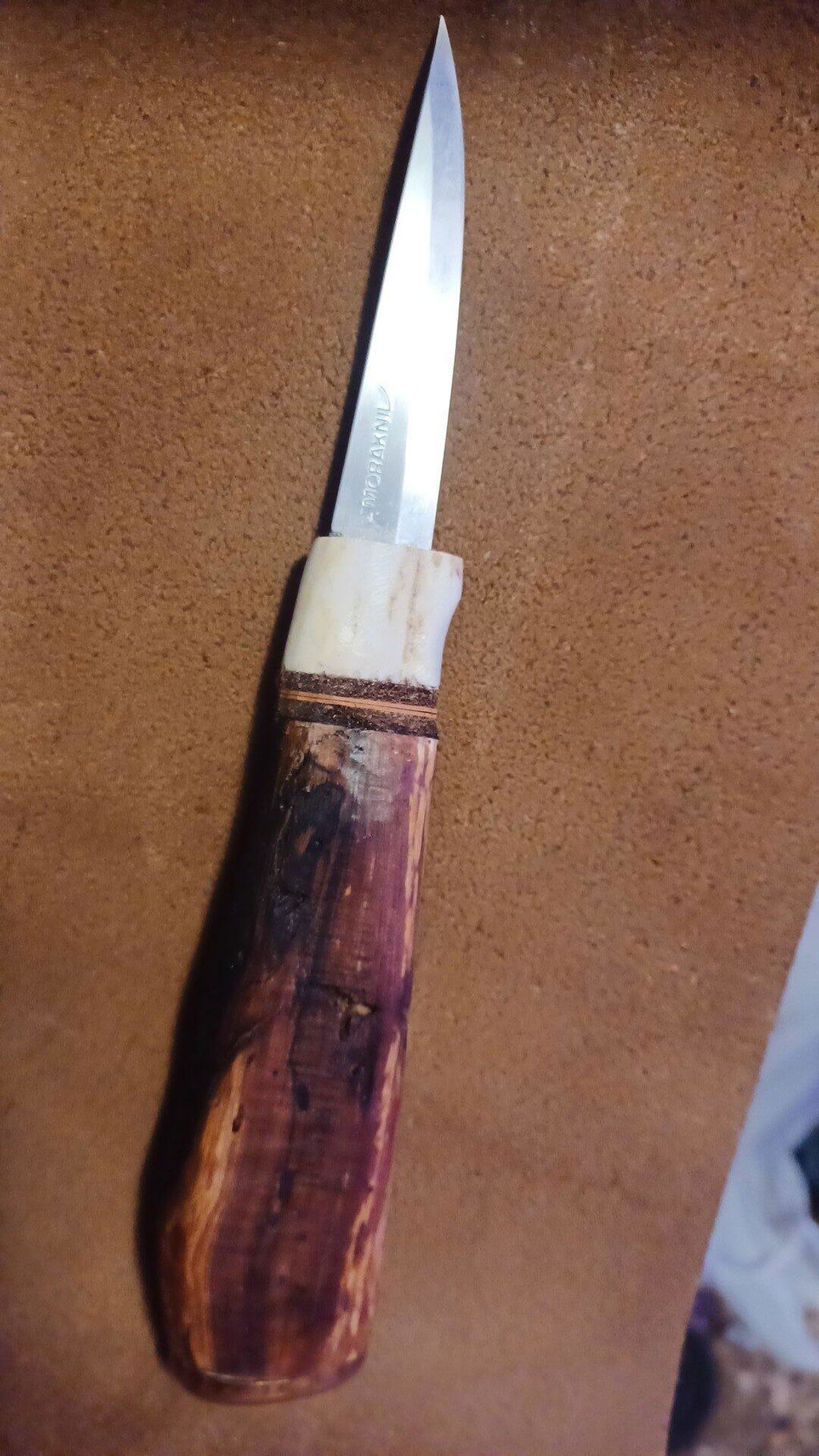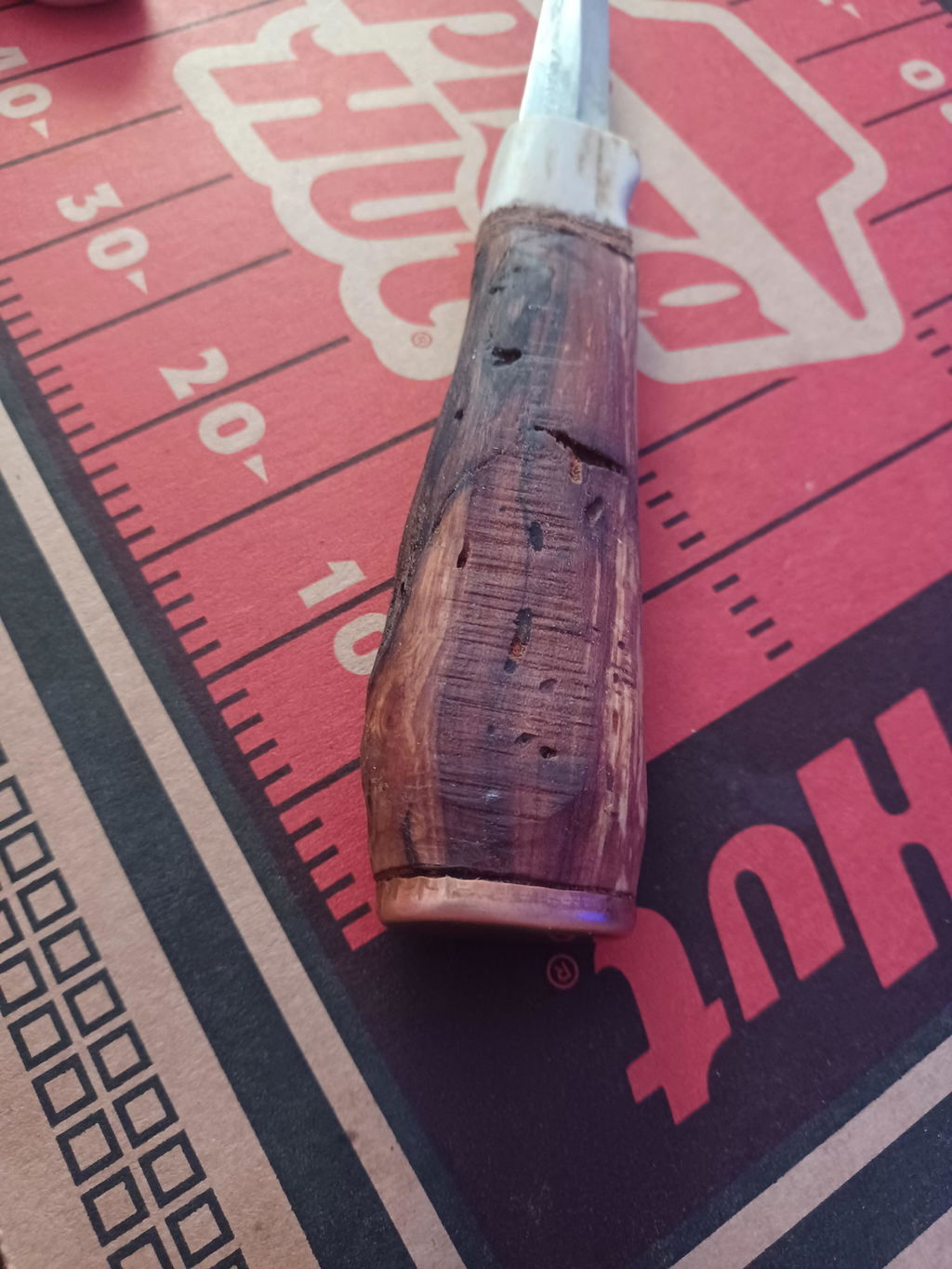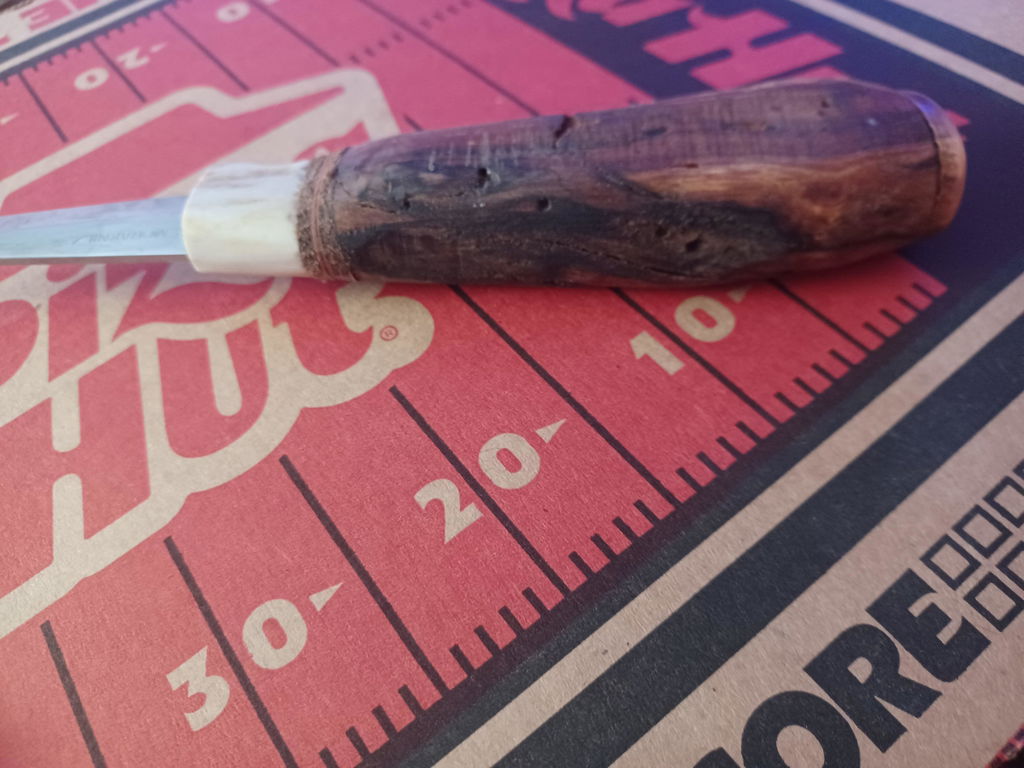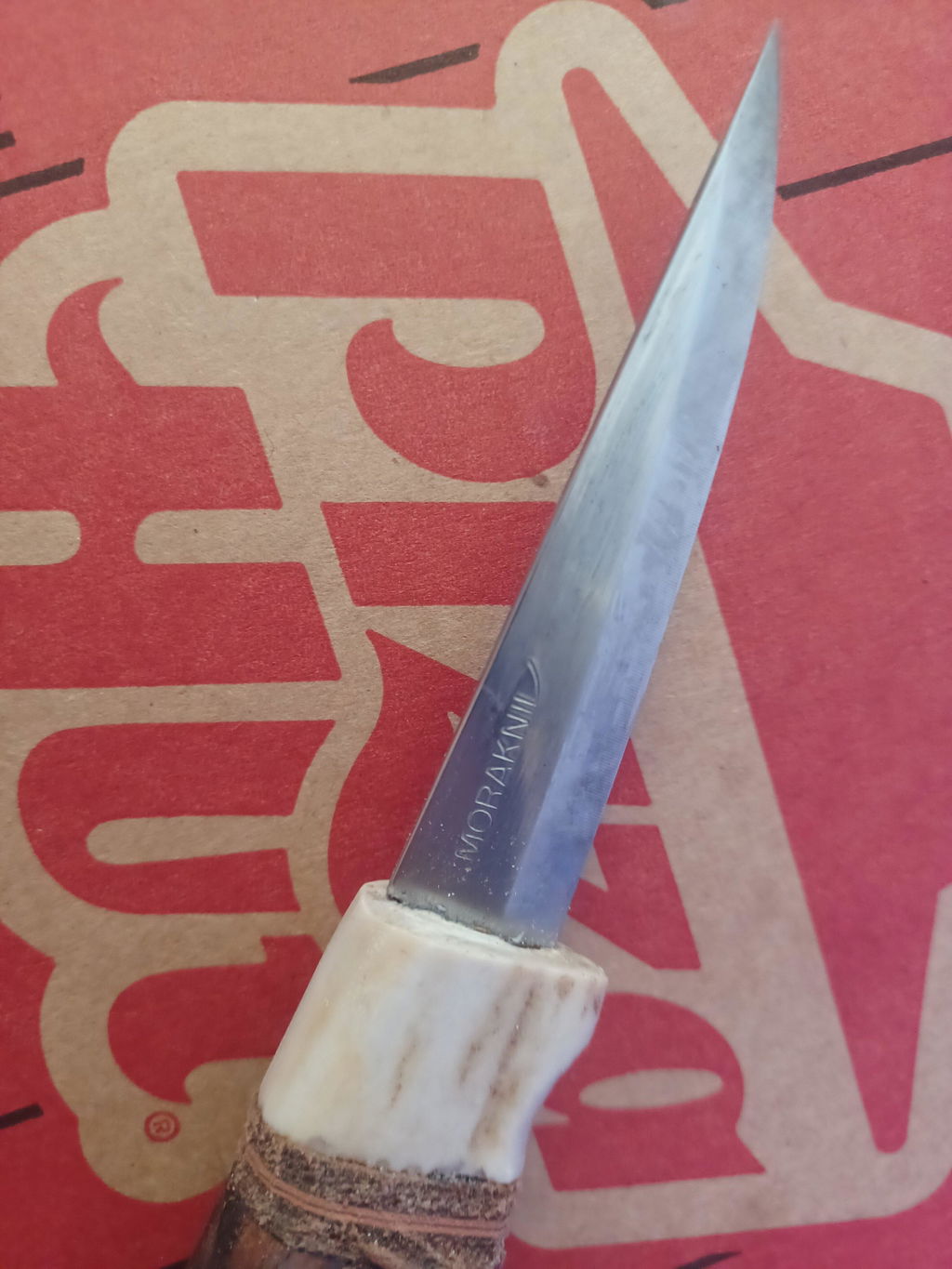
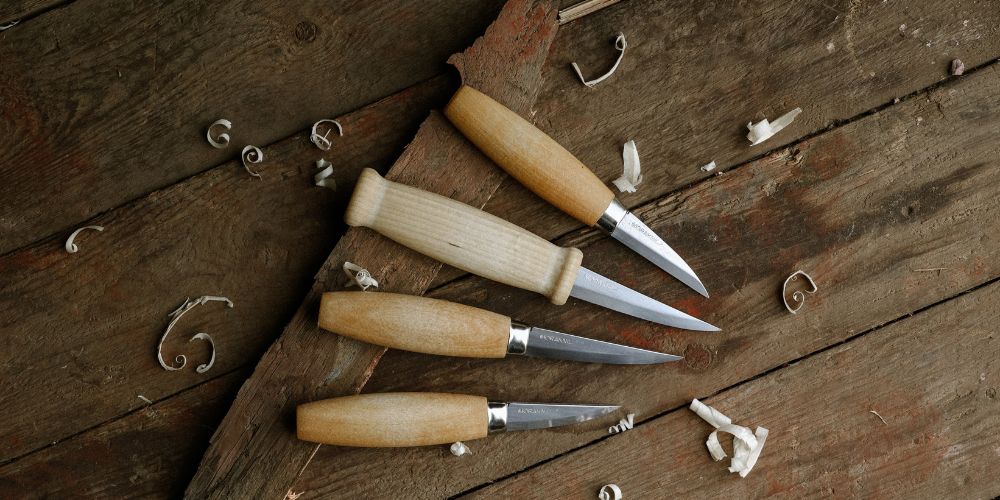
A carving knife does not have to look dull before you notice that something has changed.
The cuts require slightly more pressure. Fine shavings become harder to control. Instead of slicing cleanly through the grain, the edge begins to compress or tear it.
With a straight carving knife, restoring the edge is relatively straightforward. Hook knives require a little more thought because the curved cutting edge cannot always be sharpened effectively on a conventional flat stone.
The good news is that neither process needs to be complicated.
Regular light maintenance is usually far easier than waiting until a carving tool becomes badly dull or damaged.
If you are putting together a carving setup, Ragweed Forge carries both wood carving knives and tools and a broad selection of sharpening supplies.
Why sharp carving tools matter so much
Every knife works better when it is sharp, but carving makes the difference particularly obvious.
Woodcarving depends on controlled cuts.
You are often working close to the finished surface, following the grain and removing very small amounts of material. A dull edge requires more force, and that extra force reduces control.
It can also cause tear-out.
Instead of slicing cleanly through the wood fibers, a dull blade may lift, split, or crush them. That becomes especially noticeable around changing grain direction and when making fine finishing cuts.
A properly sharpened carving knife allows you to concentrate on the shape of the work rather than fighting the tool.
That is one reason sharpening should be treated as part of carving rather than as a separate maintenance chore.
Sharpen before the knife becomes truly dull
One of the most useful habits a new carver can develop is maintaining an edge early.
If your knife is still in good condition, stropping may be all it needs.
If you wait until the edge has become visibly rounded or damaged, you will have to remove more steel with a stone or diamond plate before the knife performs correctly again.
Think of sharpening and stropping as two different levels of maintenance.
Sharpening removes enough material to restore the cutting edge.
Stropping refines that edge and can keep a well-maintained carving knife working for a surprisingly long time between more substantial sharpening sessions.
Our broader article on how to sharpen a knife and choose sharpening tools covers the basic sharpening process in more detail.
How to sharpen a straight carving knife
Many Scandinavian carving knives use a wide Scandi-style bevel.
That makes them relatively intuitive to sharpen because the bevel itself provides a reference surface.
Instead of trying to estimate an angle in the air, place the bevel against the sharpening surface so that it lies flat.
You should feel the bevel settle into position.
From there, move the blade across the stone or diamond plate while maintaining full contact with the bevel. Work along the entire cutting edge instead of repeatedly sharpening one small section.
The goal is to reach the apex evenly from heel to tip.
Once you have worked one side enough to create a very small burr along the opposite side, switch sides.
Repeat the process until the edge is even.
As you get closer to finishing, use lighter pressure. Heavy pressure is useful for removing material quickly, but it makes refining the final edge more difficult.
Do not accidentally create a secondary bevel
A common mistake when sharpening a Scandi-ground carving knife is lifting the spine slightly at the end of each stroke.
Over time, that can create a small secondary bevel at the cutting edge.
The knife may still become sharp, but you have changed the geometry that made the broad Scandinavian bevel so useful for controlled woodworking in the first place.
If your carving knife was designed with a zero or near-zero Scandi grind, follow the existing bevel unless the manufacturer specifies otherwise.
This is especially important with purpose-built carving knives.
The geometry has been chosen for slicing wood efficiently. Sharpening should maintain that performance rather than gradually turning the edge into something different.
For more about choosing a first tool, see our guide to carving knives for beginners.
What grit should you use?
Start with the condition of the edge, not an arbitrary grit number.
If the knife is simply losing its bite, there is little reason to begin with an extremely coarse abrasive.
A medium or fine sharpening surface may be enough to restore the edge.
Coarse abrasives are more useful when you need to remove damage, correct a badly rounded edge, or re-establish geometry.
After the edge has been restored, move progressively finer if you want a more polished finish.
Carving knives benefit from a clean, refined edge because they are used for controlled slicing rather than heavy impact work.
Finish by stropping to remove the remaining burr and polish the edge.
Ragweed Forge's sharpening collection includes diamond plates, stones, stropping compounds, and other options for building a simple sharpening setup.
How to strop a carving knife
Stropping is one of the easiest ways to maintain a carving knife before it becomes dull enough to require a stone.
Use a leather strop either plain or with an appropriate polishing compound.
Lay the bevel against the leather and move the knife away from the cutting edge.
Do not push the edge forward into the strop as you would across some sharpening stones. The edge can cut into the leather.
Use light pressure.
Too much pressure allows the leather to wrap around the edge, which can gradually round the apex.
Alternate sides and pay attention to how the edge feels.
A few careful passes after a carving session can often restore the crispness needed for clean woodworking cuts.
Hook knives need a different approach
A hook knife presents a different sharpening problem.
Its curved cutting edge is designed to hollow concave surfaces such as spoon bowls, cups, and kuksas. That same curve means much of the edge cannot simply be laid flat across a conventional bench stone.
The first step is understanding which surfaces of your particular hook knife are intended to be sharpened.
Hook knife designs vary. Some are single-edged, some double-edged, and bevel placement differs between models.
Do not automatically sharpen both surfaces just because you would do so with a conventional knife.
Follow the existing geometry.
The Mora carving collection includes straight carving knives as well as purpose-built hook knives, providing good examples of how specialized carving blades differ from ordinary outdoor knives.
Sharpening the outside of a hook knife
Depending on the design, the outside surface of the hook may be accessible with a flat or relatively narrow sharpening surface.
Work carefully around the curve rather than trying to force the entire edge into contact at once.
A narrow sharpening tool provides more control because it can follow the changing shape of the blade.
The same principle applies as with a straight knife: remove only enough material to restore the existing bevel and reach the cutting edge.
Avoid flattening parts of the curve.
That curve is what allows the hook knife to move smoothly through a spoon bowl or other concave surface.
Sharpening the inside curve of a hook knife
The inside curve usually requires a tool that fits inside the hook.
A small round or suitably shaped sharpening tool can follow the radius in a way a broad bench stone cannot.
Move carefully along the complete curve and maintain contact with the existing bevel.
The aim is consistency.
If one part of the hook is sharpened more aggressively than another, the cutting edge can develop uneven sections that become noticeable during carving.
This is one of those jobs where slower is usually better.
You are maintaining a relatively small precision cutting tool, not trying to remove a large amount of steel.
How to strop a hook knife
Stropping is particularly useful for hook knives because it can extend the time between more involved sharpening sessions.
A shaped leather strop or another stropping surface that fits the inside curve allows you to polish the edge without changing the basic geometry.
Always move in a direction that prevents the cutting edge from digging into the leather.
Again, light pressure matters.
The objective is to remove the remaining burr and refine the apex, not reshape the blade.
Because hook knives can be awkward to sharpen after they become very dull, frequent stropping is often the easiest maintenance strategy.
How do you know when the edge is sharp enough?
You do not need to test a carving knife by shaving arm hair.
Wood itself provides a better answer.
A properly sharpened carving knife should take thin, controlled shavings without excessive pressure. It should enter the wood predictably rather than skating across the surface.
A hook knife should cut through the bowl of a spoon cleanly without forcing you to pry or scoop chunks of wood out.
Pay particular attention to the quality of the surface left behind.
A clean surface usually tells you more about carving performance than a dramatic sharpness test does.
Pay attention to the wood before blaming the knife
Not every difficult cut means your knife is dull.
Grain direction matters enormously.
Wood that carves cleanly in one direction may tear badly when approached from the opposite direction. Grain can also change direction around knots, branches, curves, and the bowl of a spoon.
If your knife suddenly begins digging or tearing in one specific area, stop and look at the grain.
Try approaching the cut from another direction before immediately returning to the sharpening stone.
Learning to read the material and learning to maintain the knife go together.
Our article on advanced spoon carving techniques and wood selection looks more closely at how tool choice, wood, and carving technique interact.
Carbon steel needs a little additional care
Many traditional carving knives use carbon steel.
It is popular for good reason: carbon steel can take a very keen edge and is well suited to controlled woodworking.
It does, however, react to moisture more readily than stainless steel.
Wipe the blade clean and dry after carving, particularly when working with green wood. Do not leave the knife damp inside its sheath.
A light protective oil may be worthwhile during longer periods of storage.
Surface patina on a carbon steel blade is not necessarily a problem, but active rust should be addressed before it begins pitting the steel.
What not to do when sharpening carving knives
The most common problems come from removing too much steel or changing the edge geometry.
Do not start with the coarsest abrasive you own unless the blade actually needs significant repair.
Do not increase the sharpening angle simply because it feels easier to reach the edge.
Do not apply heavy pressure during final sharpening and stropping.
And with a hook knife, do not assume that every surface should be sharpened in the same way as a straight knife.
Look carefully at the original geometry and preserve it.
A carving tool that receives frequent, gentle maintenance should rarely need aggressive repair.
Build a simple carving sharpening kit
A practical sharpening setup does not need to contain dozens of tools.
For a straight Scandinavian carving knife, a suitable stone or diamond plate and a leather strop can cover most routine maintenance.
If you use hook knives, add a sharpening and stropping option shaped to reach their curved edges.
Keep the equipment close to where you carve.
If sharpening requires finding equipment stored in a different room or unpacking an elaborate kit, it is easy to postpone maintenance until the knife is already dull.
A simple setup that gets used regularly is far more valuable.
Sharp tools make carving more enjoyable
Good carving tools are designed to remove wood with control, not force.
Keeping them sharp preserves that feeling.
Maintain the broad bevel of a straight carving knife, follow the original geometry of a hook knife, remove as little steel as necessary, and strop regularly before the edge becomes truly dull.
Your tools will last longer, your cuts will be cleaner, and carving becomes much more predictable.
If you are building or upgrading your woodworking kit, browse carving knives and woodworking tools, explore the Mora carving collection, or find sharpening supplies at Ragweed Forge.