Choosing your first bushcraft knife can feel more complicated than it needs to be. There are different steels, blade shapes, grinds, handle materials, tang styles, sheath options, and price points. But for a beginner, the right knife does not have to be the most expensive or the most tactical-looking tool on the shelf. It needs to be dependable, comfortable, easy to sharpen, and useful for the kind of outdoor work you are actually going to do.
A good beginner bushcraft knife should help you build skills. It should make feather sticks, carve notches, prepare kindling, cut cordage, handle simple food prep, and take care of ordinary camp chores without feeling fragile or awkward. At Ragweed Forge, our Outdoor Knives for Beginners collection is built around exactly that idea: practical knives that give new outdoorsmen and bushcrafters confidence from the first trip out.
Start with the tasks, not the knife
The best way to choose a bushcraft knife is to think first about how you plan to use it. A beginner who is learning basic camp skills does not need a drawer full of specialty blades. One well-chosen fixed blade can cover most of the important work.
For many beginners, the everyday tasks are simple but demanding. You may be making feather sticks for fire prep, carving a tent stake, trimming branches, slicing food, or learning how different woods respond to the edge. Those jobs reward control more than brute force. That is why many traditional bushcraft knives have moderate blade lengths, comfortable handles, and simple edge geometry rather than oversized blades.
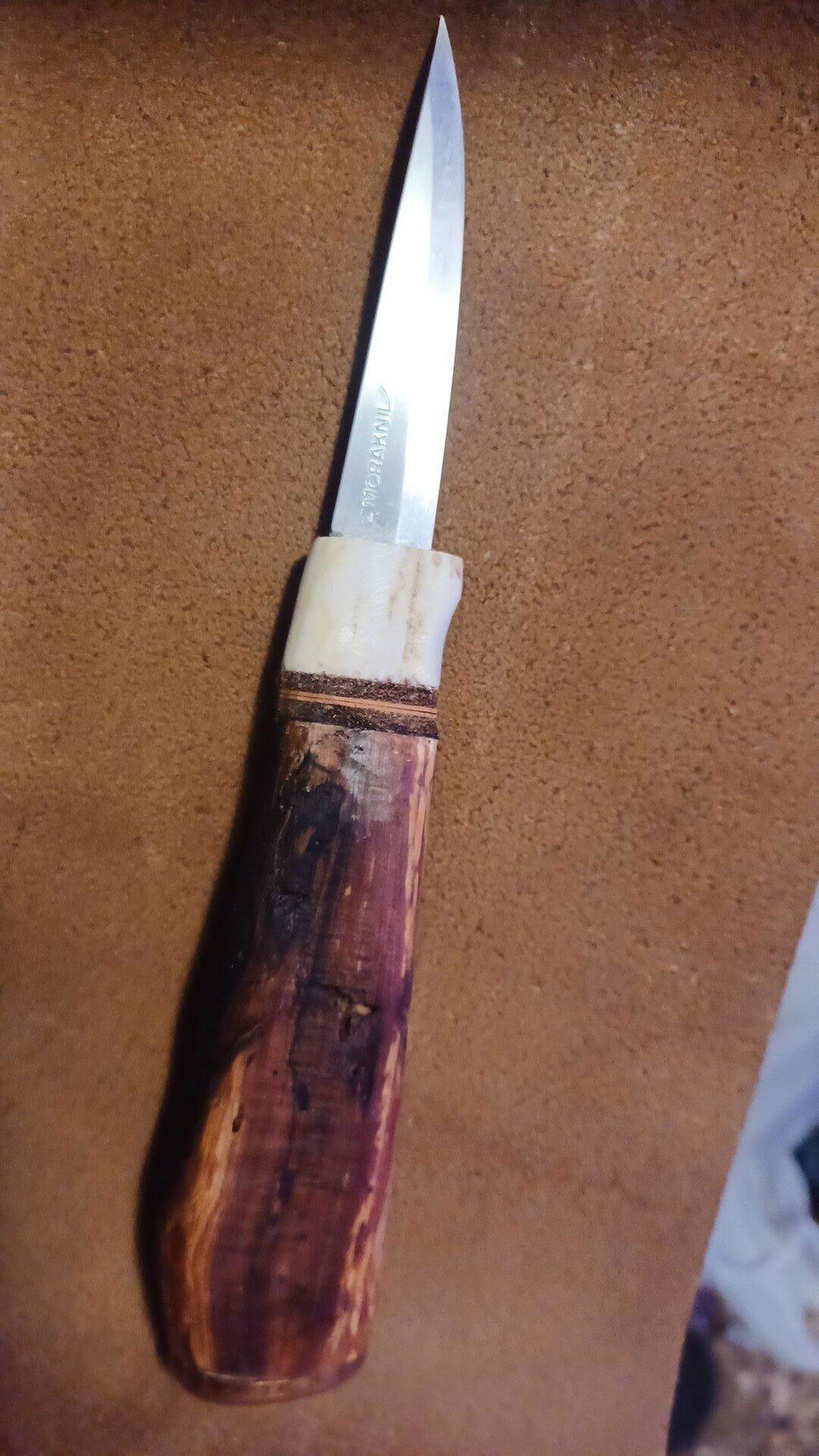
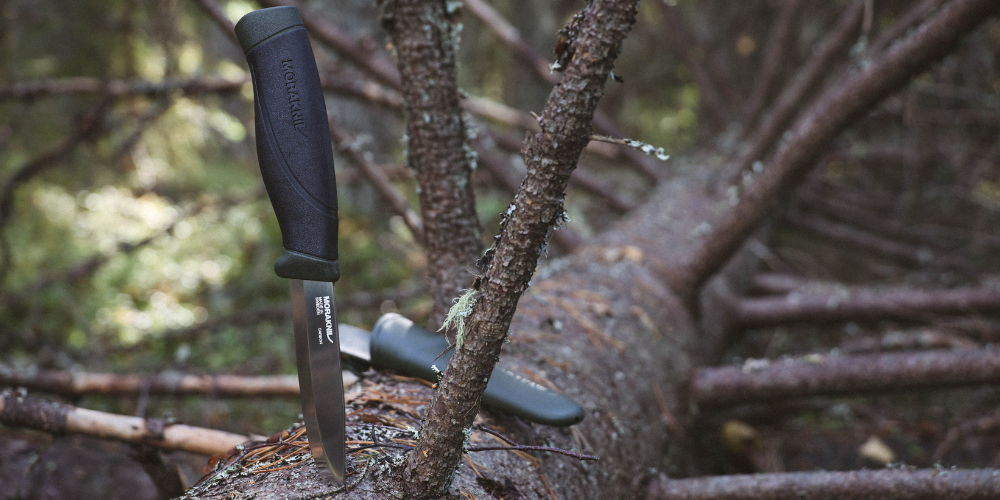
If your main interest is general outdoor use, the Mora Companion is one of the easiest starting points. It is affordable, light, comfortable, and practical enough for both beginners and experienced users. The Mora Companion MG Carbon is a good example of a simple all-round outdoor knife: easy to carry, easy to use, and easy to sharpen.
If you already know you want a sturdier tool for harder camp use, the Mora Companion Heavy Duty Military Green Carbon gives you a thicker blade and a larger handle while staying beginner-friendly. For someone who wants a knife that feels more robust without jumping straight into a premium price range, it is a very sensible step up.
Why a fixed blade usually makes sense for beginners
A folding knife can be useful in the pocket, but bushcraft usually favors a fixed blade. There is no lock mechanism to worry about, no hinge to clean out, and no moving parts between your hand and the blade. When you are learning safe cutting technique, a fixed blade gives you a more predictable tool.
This does not mean every beginner needs a massive survival knife. In fact, many people learn better with a knife that is simple and controllable. A moderate fixed blade gives you enough cutting edge for woodwork and camp chores while still allowing careful, accurate cuts.
That balance is one of the reasons Scandinavian outdoor knives have remained so popular. Many of the knives in Ragweed Forge’s Bushcraft collection are chosen for real field use: fire making, shelter work, carving, and general camp tasks. The emphasis is on practical performance, not decoration.
The Scandi grind advantage
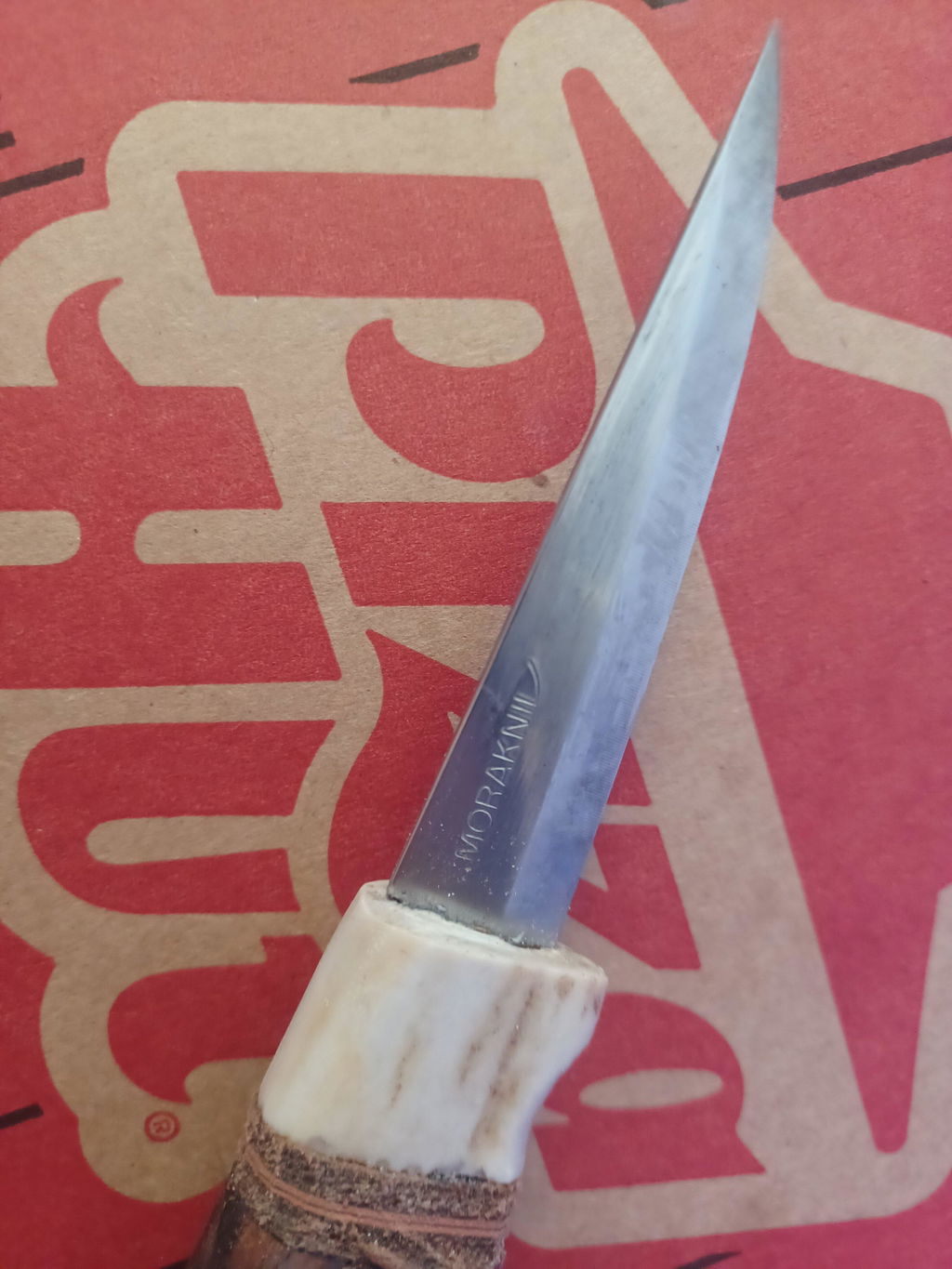
One of the most important features to understand is the grind. The grind is the shape of the blade as it tapers toward the cutting edge. For bushcraft, a Scandinavian grind, often called a Scandi grind, is one of the most beginner-friendly options because it bites well into wood and is relatively straightforward to sharpen.
A Scandi grind has a wide bevel that can be laid against a stone, which helps beginners learn the sharpening angle by feel. It also excels at the kinds of controlled wood cuts used in feather sticks, notches, and carving. If you want a deeper explanation, Ragweed Forge’s blog article Knife Grind Guide: Why the Scandi Grind Still Reigns Supreme is a natural next read.
This is also one reason Mora knives are so often recommended to beginners. Many Mora models use Scandinavian-style edges, and Ragweed Forge’s article Mora Knives: Best Fixed-Blade Knives for Bushcraft, Carving, and EDC goes deeper into why these Swedish knives have earned such a strong reputation among bushcrafters, carvers, campers, and everyday users.
Carbon steel or stainless steel?
For a first bushcraft knife, both carbon steel and stainless steel can be good choices. The better option depends on where you will use the knife and how much maintenance you are willing to do.
Carbon steel is popular because it takes a keen edge and is generally easy to resharpen. For wood carving, feather sticks, and field sharpening, that matters. The tradeoff is that carbon steel needs care. It should be wiped dry after use and oiled when needed, especially if you are working in wet weather or storing it for a while.
Stainless steel is more forgiving in damp conditions. If you camp near water, live in a humid climate, fish, or simply want lower maintenance, stainless can be the better beginner choice. It may not develop the same patina as carbon steel, and some users prefer the feel of carbon on wood, but stainless makes a lot of sense for a first outdoor knife.
The important thing is not to overthink it. If you enjoy maintaining your tools and want easy sharpening, choose carbon. If you want less worry around moisture, choose stainless. Either way, a sharp, comfortable knife used with good technique will outperform an expensive knife that does not fit your hand or your habits.
Handle comfort matters more than beginners expect
A bushcraft knife is not just a blade. The handle determines how safely and comfortably you can use it over time. A beginner should look for a handle that fills the hand without creating hot spots, gives a secure grip in wet or cold conditions, and allows different working grips.
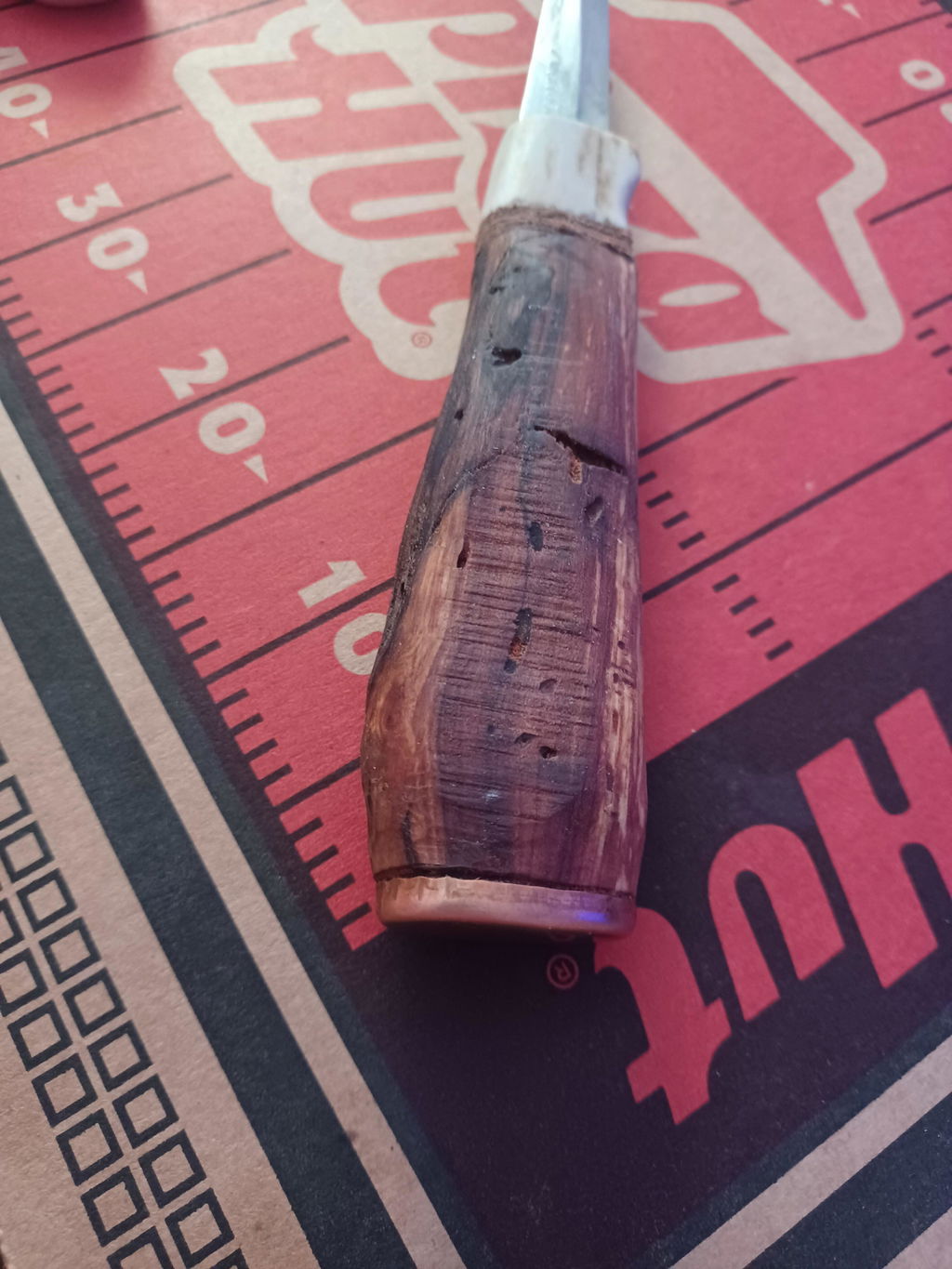
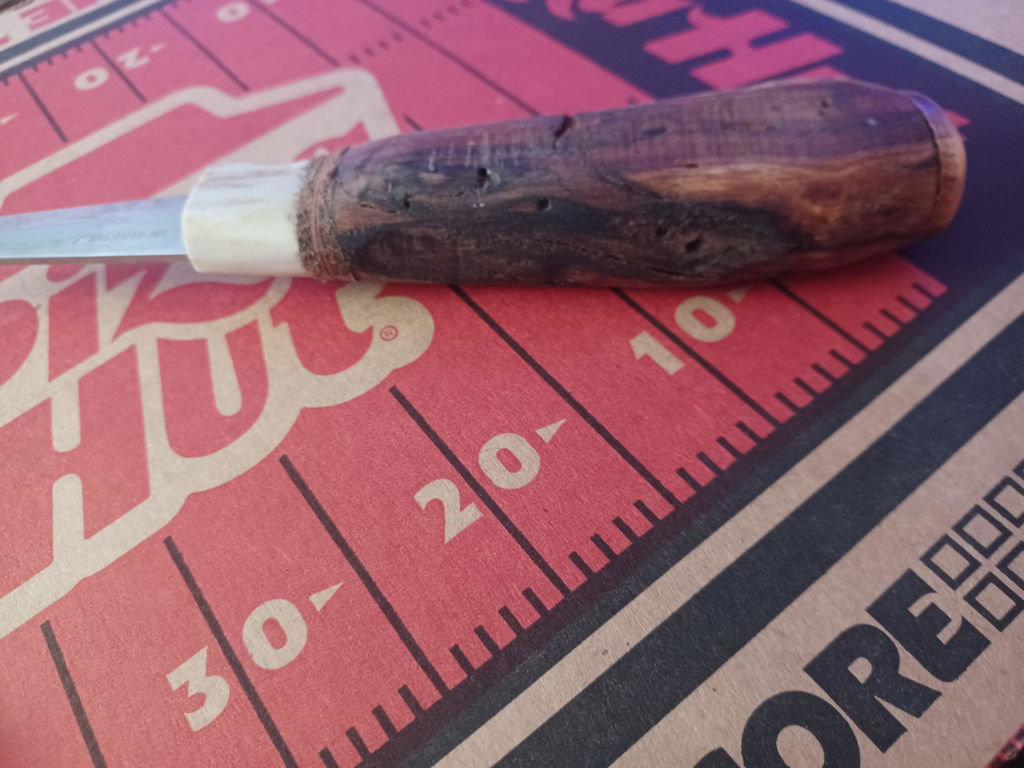
Rubberized and polymer handles are common on beginner-friendly outdoor knives because they are durable and grippy. Traditional wood handles have their own appeal, especially on Nordic knives, but they may require more care. Neither is automatically better. What matters most is whether the handle gives you control.
This is where knives like the Mora Companion series perform well. They are not complicated, but they are comfortable. For a beginner, that comfort can make practice safer and more enjoyable. A knife that feels natural in the hand encourages good technique.
When to choose a more robust bushcraft knife
Some beginners start with light camp chores. Others know right away that they want a knife for tougher outdoor work. If you expect to split small kindling, scrape a ferro rod, process rough materials, or rely on one knife for extended trips, it may be worth choosing a more robust model.
The Mora Garberg Blackened Carbon with Simple Poly Sheath is a stronger, full-tang option designed for more demanding use. It has a full Scandi grind and a spine that can be used with a fire steel, making it a serious step up from lighter beginner knives. Ragweed Forge’s product page describes it as a true full-tang Mora knife for demanding tasks, with a grippy molded handle and practical sheath design.
For a beginner, the Garberg may be more knife than necessary for simple weekend use. But for someone who wants one durable tool to grow into, it is a smart long-term choice. It is especially relevant if your bushcraft practice includes fire prep, wood processing, and extended outdoor trips.
Another good middle ground is the Mora Bushcraft Survival Black, which comes with an integrated ferro rod and diamond sharpener on the sheath. That kind of setup makes sense for beginners who want to build a compact field kit around one knife.
Do not forget sharpening and fire starting
A beginner bushcraft knife should not be bought alone. A dull knife is more dangerous and less useful than a sharp one, and learning to maintain your edge is part of learning bushcraft. Once you choose your knife, add a simple sharpening solution from the Sharpening collection and practice before you need to sharpen in the field.
Fire starting is another natural companion skill. A knife and ferro rod are often used together for fire prep, especially when making shavings, feather sticks, or scraping material for tinder. Ragweed Forge’s Fire Starting collection includes ferro rods, strikers, and tinder kits chosen for outdoor use.
The best beginner kit is not complicated. A reliable knife, a way to sharpen it, and a dependable fire-starting tool will take you a long way. As your skills grow, you can add carving tools, axes, saws, and specialty gear, but the foundation remains the same.
The best beginner knife is the one you will actually use
A first bushcraft knife should make outdoor skills easier to learn. It should not be so expensive that you are afraid to use it, so large that it becomes clumsy, or so specialized that it only works for one task. The best beginner knife is usually simple, sharp, comfortable, and easy to maintain.
For many people, that means starting with a Mora Companion, stepping up to a Companion Heavy Duty, or choosing from Ragweed Forge’s broader Mora Bushcraft selection. If you want a more capable long-term field knife, the Mora Garberg is worth serious consideration. If you want a ready-made survival-style package, a Mora Bushcraft Survival model may be a better fit.
Whatever you choose, spend time using it. Make feather sticks. Carve notches. Practice safe grips. Learn how the edge moves through wood. Sharpen it before it gets truly dull. A good bushcraft knife is not just a product; it is a tool that becomes more useful as your skill improves.
Explore Ragweed Forge’s Outdoor Knives for Beginners, Bushcraft, and Mora collections to find a knife that fits your hand, your budget, and the outdoor skills you want to build.