A folding saw is one of those bushcraft tools that can seem unnecessary until you use a good one.
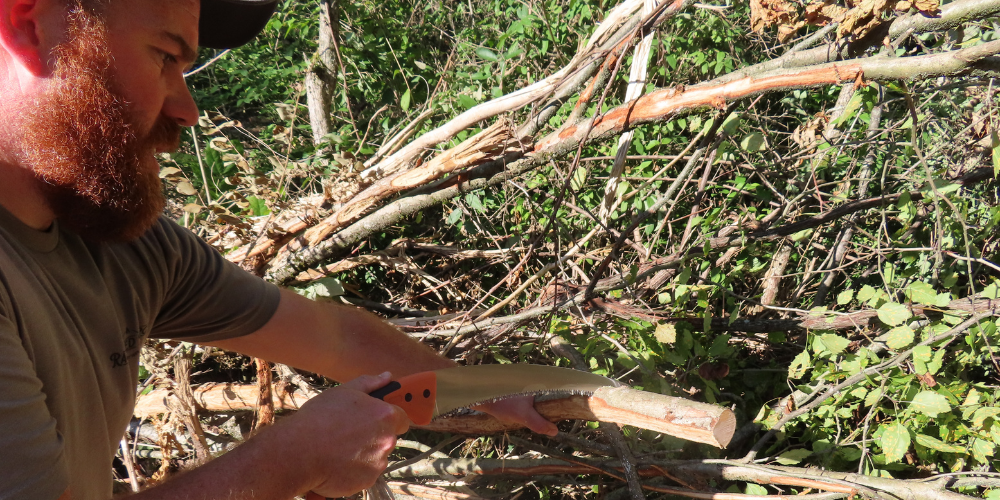
A knife can make feather sticks and carve camp tools. An axe can split wood and handle heavier chopping. But when you need to turn branches and small logs into usable lengths of firewood, a sharp folding saw is often the fastest and most controlled tool in the pack.
It is also easy to carry.
That combination of cutting ability and portability is why folding saws have become a common part of camping, bushcraft, hunting, trail, and emergency kits.
But not every folding saw is designed for the same work. Blade length, tooth geometry, wood type, blade construction, handle design, and locking mechanism can all change how a saw performs.
Before choosing your next bushcraft saw, here is what actually matters.
Start with what you plan to cut
The best folding saw for bushcraft is not necessarily the biggest or most aggressive saw available.
Start with the material.
Are you mostly cutting fresh branches around camp? Processing dead and seasoned firewood? Clearing trail obstacles? Building camp furniture? Carrying a saw primarily as an emergency tool?
A saw designed for green wood can feel very different from one intended for dry hardwood.
For example, Ragweed Forge carries two Swedish-made G-Man folding saws that look similar at first glance but are designed around different cutting conditions.
The G-Man PX 237 folding saw uses a 7 TPI tooth geometry optimized for fresh limbs and green timber. The G-Man PX 239 folding saw uses a finer 9 TPI configuration designed for dry timber, seasoned hardwood, and more controlled cutting.
That distinction is more important than simply asking which saw looks better in your pack.
Blade length: 7-inch vs. 10-inch folding saw
For a bushcraft folding saw, blade length is one of the easiest specifications to understand.
A shorter blade is easier to carry. A longer blade gives you more stroke length and makes larger cuts easier.
Around seven inches is a useful size for hikers, hunters, day trips, lightweight bushcraft kits, and people who want a saw available without dedicating much pack space to it.
A 10-inch blade gives you more reach and cutting capacity. If you expect to make campfires regularly, process thicker branches, or use the saw frequently, that extra length can be worthwhile.
Both the G-Man PX 237 and PX 239 are currently available from Ragweed Forge in 7-inch and 10-inch versions.
For most users, the decision comes down to priorities.
If packability comes first, choose the shorter saw.
If cutting efficiency comes first and the extra few inches are not a problem, the 10-inch option is likely the more versatile camp tool.
Tooth geometry matters more than many buyers realize
Two folding saws with the same blade length can behave very differently in wood.
The number, shape, and spacing of the teeth determine how aggressively the blade bites and how efficiently it clears material from the cut.
Coarser teeth are generally useful when speed and wood-chip clearance matter. Finer teeth can provide more control and a smoother cut in harder or drier material.
This is why simply searching for the “sharpest folding saw” does not tell you much.
The better question is: sharp for what?
G-Man's PX 237 uses 7 TPI teeth for fast cutting in green timber. Its PX 239 increases that to 9 TPI for dry timber and hardwood. Both use taper-ground Swedish steel blades designed to reduce friction during the cut.
For a bushcrafter who regularly works with fresh branches, the PX 237 makes sense.
For someone who is often sawing dead standing wood, dry limbs, or seasoned campfire wood, the finer PX 239 deserves a closer look.
Green wood vs. dry wood
Understanding the difference between green and dry wood will help you choose a saw more intelligently.
Green wood still contains considerable moisture. Fresh-cut branches can be fibrous, springy, and full of sap. The saw needs to cut efficiently without constantly clogging or binding.
Dry and seasoned wood presents a different challenge. Hard, dense fibers can reward a finer, more controlled tooth configuration.
In real-world bushcraft, you may encounter both.
That is one reason experienced outdoorsmen often end up with more than one saw or blade configuration over time. A lightweight green-wood saw may be ideal during trail clearing or shelter work, while a finer saw can be more satisfying for dry camp wood and detailed projects.
If you want one general-purpose folding saw, think about the material you cut most often rather than trying to cover every possible situation.
Look for a blade that reduces binding
Cutting speed matters, but a saw that constantly pinches in the kerf quickly becomes frustrating.
Blade geometry can help reduce that friction.
Both the G-Man PX 237 and PX 239 use taper-ground blades. The blade becomes thinner toward the spine, reducing the amount of metal rubbing against the wood as the cut deepens. G-Man describes the design as helping reduce friction and prevent pinch during cutting.
That is exactly the kind of feature worth looking for in a bushcraft saw.
In the field, smooth cutting is often more valuable than impressive specifications. A saw that tracks predictably and does not constantly bind lets you work longer with less effort.
A good folding saw needs a secure lock
A folding design is convenient because the blade disappears into the handle for transport.
That also makes the locking mechanism important.
The blade should remain secure when fully open, and ideally it should stay safely retained when closed.
Both current G-Man folding saw models use locking systems designed to secure the blade during use and transport.
When evaluating any folding saw, open and closing convenience should never come at the expense of confidence during the cut.
A folding saw is meant to be worked. If the blade or handle feels vague under pressure, the portability advantage means very little.
Handle comfort becomes important on longer jobs
Handle design is easy to underestimate when looking at product photos.
After ten or twenty minutes of sawing, it becomes much more important.
A good bushcraft saw should give you enough grip to pull the blade through wood without constantly squeezing the handle. The shape should feel secure when your hands are cold, damp, or tired.
G-Man uses a biobased handle material with an internal metal core on its PX 237 and PX 239 folding saws. The goal is a stable structure with an ergonomic grip while keeping the saw suitable for field use.
That practical approach fits the role of a bushcraft tool. Comfort is not decoration. It affects how efficiently you can work.
A folding saw should be easy to carry
The best bushcraft tool is not useful if it is always left at home.
That is one of the strongest arguments for a folding saw.
A 7-inch model can fit easily into a daypack or compact field kit. A 10-inch model still remains much easier to carry than most framed saws while adding meaningful cutting capacity.
For backpacking and mobile bushcraft, this matters more than maximum cutting speed.
If your style of camping involves walking several miles before making camp, a folding saw is usually easier to justify than a full-size bow saw.
If you camp from a vehicle, cabin, hunting camp, or fixed base and process large amounts of wood, the calculation changes. Our guide to choosing between a folding saw and a bow saw is a useful companion to this article once that guide is added to the Ragweed Forge blog.
When should you move up to a bow saw?
There is a point where asking a folding saw to do more work stops making sense.
If your main goal is processing larger quantities of firewood, a bow saw provides a longer stroke and rigid frame that can make repetitive cutting more efficient.
G-Man's current range illustrates the progression well. The compact 15-inch G-Man 149 Mini bow saw is designed for camping, trail work, and smaller wood-processing jobs. The 21-inch G-Man 147 bow saw steps up the capacity, while larger G-Man 140 models extend into serious firewood and forestry work.
A folding saw is therefore not a smaller version of every saw you could ever need. It fills a specific role extremely well: substantial cutting performance in a compact package.
How a folding saw fits with your bushcraft knife
A saw does not replace a good bushcraft knife.
It lets the knife do the work it was designed for.
Instead of repeatedly forcing a knife through larger pieces of wood, use the saw to cut branches and logs to length. Then use your knife for feather sticks, notches, carving, food preparation, and finer camp tasks.
If you are putting together your first kit, our article Best bushcraft knives for beginners: what to look for before you buy explains the features worth considering in a field knife.
You can also explore Ragweed Forge's Bushcraft collection for knives and other tools built around practical outdoor use.
The goal is not to carry as many cutting tools as possible. It is to give each tool the jobs it handles efficiently.
What about carrying an axe too?
For wood-focused trips, a knife, folding saw, and compact axe make a highly capable system.
Saw the wood to length.
Split it with the axe.
Use the knife for controlled work and fire preparation.
This approach reduces the amount of chopping required and avoids asking a knife to handle tasks that a saw can accomplish more efficiently.
Ragweed Forge carries handmade Roselli axes from Finland for bushcraft, camping, and firewood processing. For a closer look at the design and craftsmanship behind them, read Roselli axes – Finnish tools built for real work.
You do not necessarily need all three tools on every trip, but together they cover an enormous range of outdoor cutting tasks.
Which G-Man folding saw should you choose?
If most of your work involves fresh branches, green wood, trail clearing, or camp tasks using recently cut timber, start with the G-Man PX 237.
Its 7 TPI blade is designed around faster cutting in green wood, and you can choose either the compact 7-inch version or the larger 10-inch blade.
If you regularly cut dry wood, dead limbs, seasoned firewood, or hardwood and prefer a finer cut, look at the G-Man PX 239.
Its 9 TPI tooth pattern is intended for more controlled cutting through those materials, again with 7-inch and 10-inch options available.
The choice is less about which model is “better” and more about which one matches the material in front of you.
Swedish saws built around practical use
G-Man manufactures its saws in Sweden and the current Ragweed Forge selection covers everything from compact folding pruning saws to professional pruning saws, bow saws, hand saws, and replacement blades.
That fits naturally alongside the Scandinavian knives and axes Ragweed Forge has specialized in for years.
The appeal is similar: simple tools, purpose-driven designs, and materials chosen to work rather than simply look impressive.
For shoppers interested in a more premium interpretation of the Scandinavian folding saw, Ragweed Forge also carries the Woxna folding saw collection, including Swedish-made folding saws with hardwood handles and multiple blade materials.
For a practical, work-focused bushcraft saw at a much more accessible price point, G-Man is an especially interesting place to start.
The best folding saw is the one that matches your work
Do not choose a folding saw based only on brand reputation, blade length, or how aggressive the teeth look.
Think about the wood.
Think about the distance you carry your gear.
Think about how much wood you realistically process.
For lightweight trips, a 7-inch saw may be all you need. For regular campfire preparation, a 10-inch blade gives you more useful capacity. Green wood and dry wood may call for different tooth patterns, while heavy wood processing may eventually justify moving to a bow saw.
A good folding saw should be simple, sharp, comfortable, safe to carry, and matched to the work you actually do.
That is the kind of tool that earns a permanent place in the pack.
Explore G-Man Swedish folding saws and bow saws at Ragweed Forge and choose the saw that fits the way you work outdoors.