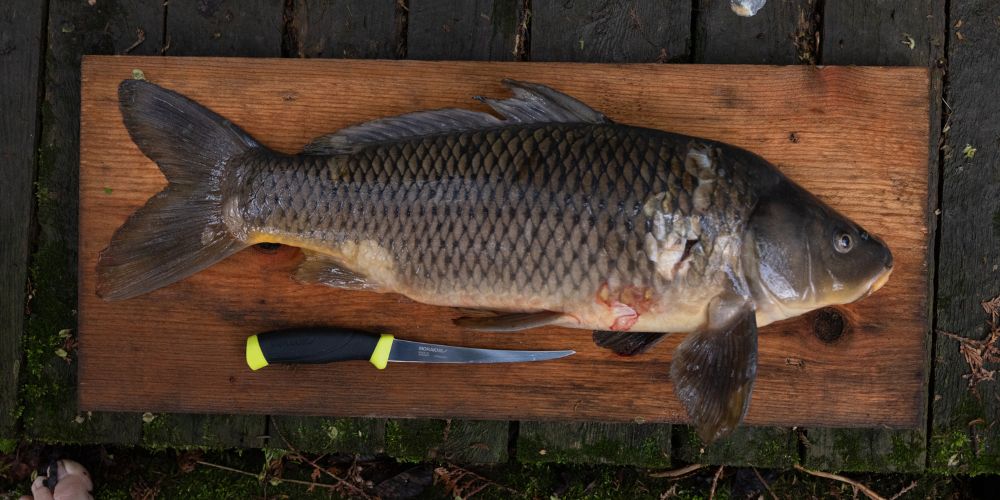
robA good fishing knife should make the work easier without getting in the way.
That sounds simple, but fishing places several very different demands on a blade. One moment you may be cutting bait or trimming line. Later, you may need to open and clean a fish, remove the fillets, work around ribs, separate skin from meat, or prepare dinner at camp.
No single knife design is perfect for every one of those jobs. A long, flexible fillet knife can follow the backbone of a walleye or salmon, but it may feel awkward when cutting frozen bait or rope. A short, stiff bait knife handles rough utility work well, but it cannot glide through a large fillet with the same precision.
The best fishing knife is therefore the one that matches the fish you catch, the water you fish, and the work you expect to do. Some anglers need one versatile knife. Others are better served by carrying a fillet knife and a separate bait or utility blade.
What is the difference between a fillet knife and a bait knife?
A fillet knife is designed primarily for separating meat from bones and skin. It usually has a narrow blade, a fine point, and some degree of flexibility. The thin profile reduces resistance as the blade moves through the fish, while the flex helps the edge follow the shape of the backbone and rib cage.
A bait knife is normally shorter, wider, and stiffer. It is built for direct cuts through baitfish, squid, frozen bait, rope, packaging, and other materials commonly handled on a boat or shoreline. Because it is less flexible, it gives the user more control when cutting against a board or working through firm material.
A general-purpose fishing knife falls somewhere between the two. It may be flexible enough for basic fish cleaning but sturdy enough for food preparation and everyday field tasks.
Ragweed Forge’s earlier guide, A fisher’s best friend—their fishing knife, provides an additional overview of fishing knife shapes, corrosion resistance, handles, and carry options.
How to choose the right fillet knife
A good fillet knife should cut cleanly without requiring unnecessary pressure. The blade must be thin enough to move through meat efficiently, but not so flexible that the user loses control.
Blade length and flexibility are the two most important variables. The right combination depends largely on the size and structure of the fish.
A short fillet knife is useful for panfish, trout, perch, crappie, and other smaller catches. It gives the angler precise tip control and makes it easier to work around small bones. A longer blade is usually more efficient for salmon, pike, lake trout, striped bass, catfish, and other larger fish because it can complete more of the cut in one smooth stroke.
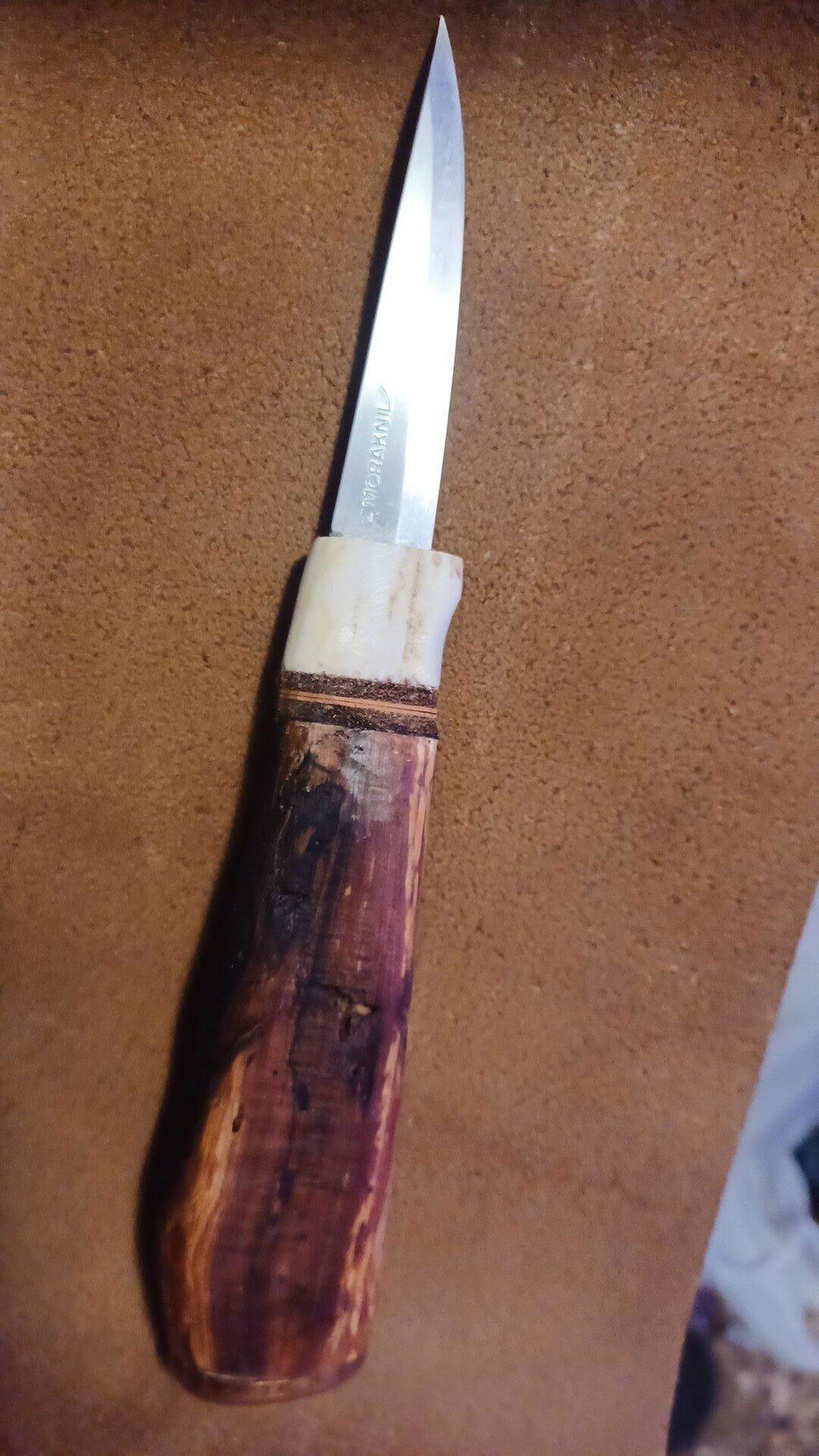
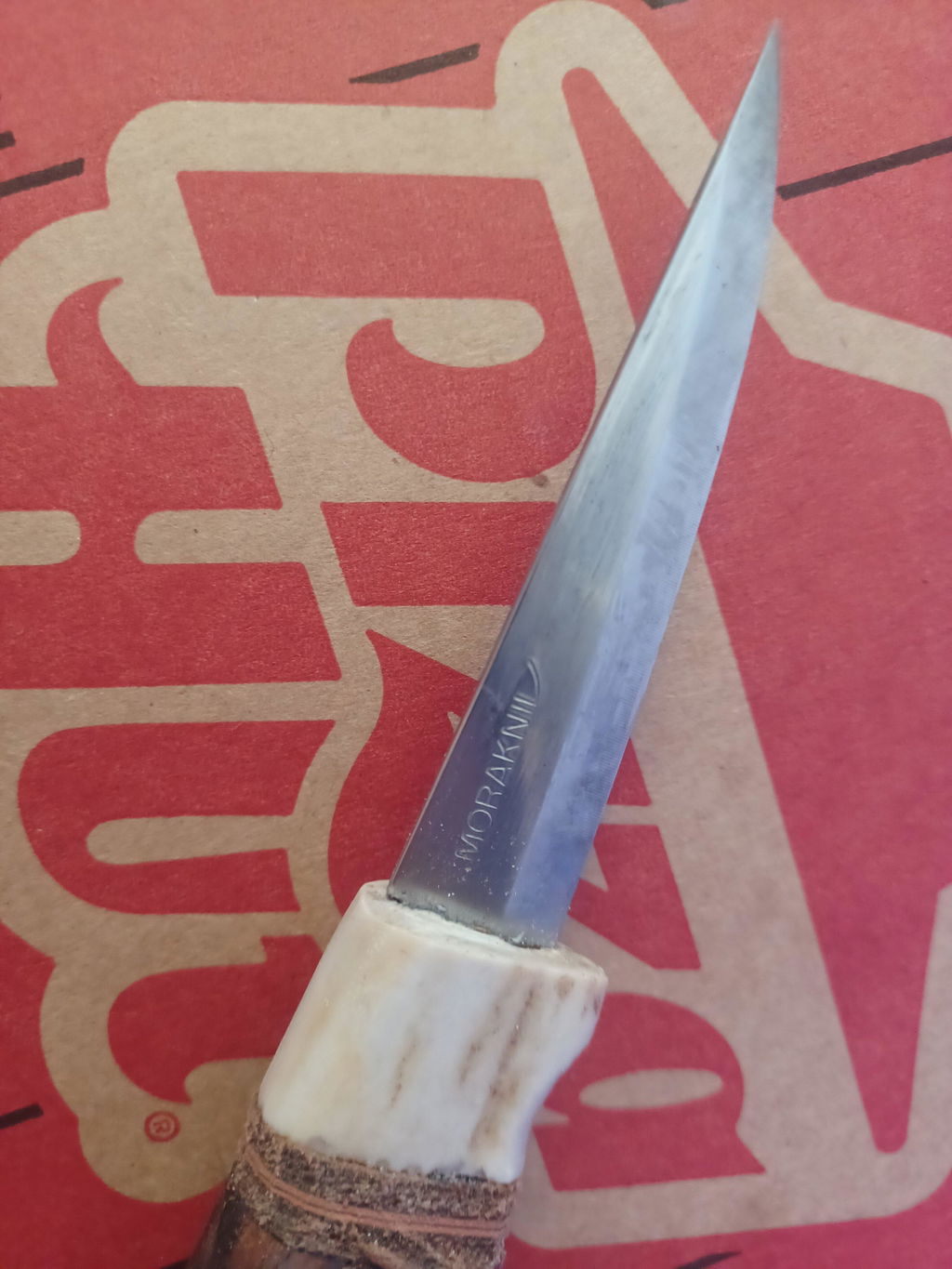
The Mora Fishing Comfort 90 fillet knife uses a flexible 90 mm blade made from Swedish stainless steel. Its compact size makes it a practical option for smaller fish, detailed cleaning work, and anglers who prefer a highly controllable blade.
For larger catches, the Mora Fishing Fillet 155 provides a 155 mm, or approximately 6.1-inch, flexible stainless steel blade. The additional length helps the user make smooth cuts along the backbone and through larger sections of meat.
The Järvenpää 1240 fillet knife offers another traditional option. It combines a highly flexible 6.2-inch stainless blade with a birch handle and leather sheath. Its lightweight construction makes it easy to carry on a belt without adding unnecessary bulk.
Fillet knife blade flexibility explained
More flexibility is not automatically better. The ideal amount of flex depends on the fish and the user’s cutting style.
A highly flexible blade is useful when removing skin or following the contours of smaller fish. The blade can bend close to the cutting board, allowing the edge to separate the meat from the skin while reducing waste.
Medium-flex blades offer a balance between control and contour-following ability. They are often the most versatile choice for anglers who clean several different species. A slightly stiffer blade can also make it easier to guide the tip along the backbone without the knife wandering away from the intended cut.
Large, dense, or thick-skinned fish may require more blade stiffness. A very soft blade can feel unstable when the user needs to push through firm tissue, heavy scales, or connective material.
The Helle Steinbit uses a long, thin fishing blade that retains enough stiffness for use with fish of different sizes. The knife has been part of Helle’s lineup for more than 30 years and combines a polished blade with a hand-finished curly birch handle.
The Helle Hellefisk takes a different approach. Its 4.84-inch Sandvik 12C27 stainless blade is relatively compact, while the cork handle keeps the complete knife extremely light. The cork also feels warmer than many synthetic materials in cold conditions, making the Hellefisk useful for fishing trips where pack weight and cold-weather comfort matter.
Choosing a fillet knife blade length
The fish you most often catch should guide your blade-length decision.
For bluegill, perch, crappie, small trout, and baitfish, a blade in the 3.5- to 5-inch range normally offers good control. Short blades are easier to turn inside a small body cavity and reduce the likelihood of cutting too deeply.
For walleye, bass, medium trout, and similarly sized fish, a blade around 5 to 7 inches is often a useful middle ground. It provides enough reach to make longer cuts without becoming difficult to control.
For salmon, large pike, lake trout, saltwater species, and large catfish, a blade of 7 inches or more may be more efficient. A longer edge can follow the full length of the fish with fewer stopping points, producing a cleaner fillet.
The best choice is not simply the longest blade available. A blade that is too long for the fish can be difficult to position, especially when working on a small cleaning table, inside a boat, or at a crowded campsite.
When to use a bait knife
Bait preparation can be harder on a knife than filleting.
Cutting frozen bait, chopping small fish, trimming squid, opening packages, and cutting rope place more force on the edge. These jobs are better suited to a stiffer blade that will not bend excessively under pressure.
The Mora Fishing Bait Knife #9106 was designed for cutting bait in commercial fisheries. It has a 4.38-inch stainless steel blade with a flat grind for efficient slicing. Its wider, stiffer construction also makes it suitable for other practical tasks such as cutting rope or rigging material.
A bait knife does not need to be especially long. A compact blade is often safer and easier to control on a moving boat. The important characteristics are a secure grip, corrosion-resistant steel, useful edge geometry, and enough stiffness to complete firm cuts without twisting.
Some anglers carry only a bait knife when they plan to release their catch or clean fish at home. Others pair a bait knife with a dedicated flexible fillet knife, keeping the fine fillet edge away from rope, frozen material, and cutting boards.
Fishing knives with built-in scalers
Fish with prominent scales may require a separate scaling step before cooking. A knife with an integrated scaler can reduce the number of tools needed in the tackle box.
The Mora Fishing Comfort 098 Scaler combines a compact 98 mm stainless blade with a serrated section along the spine. The serrations can remove scales while the primary edge handles cleaning and basic filleting.
For anglers who prefer a longer blade, the Mora Fishing Comfort 150 with Scaler combines the reach and flexibility of a fillet knife with an integrated scaling spine. The stainless construction is intended for use around moisture and changing weather, and the longer blade is better suited to larger fish.
An integrated scaler is useful for shore fishing, camping, and compact boat kits. However, the scaler should not be mistaken for a saw. Its purpose is to lift scales from the skin, not to cut heavy bones or frozen material.
Stainless steel or carbon steel for a fishing knife?
Stainless steel is the default choice for most fishing knives because it provides greater resistance to corrosion in wet environments. It is especially practical for saltwater fishing, where moisture and salt can quickly attack an unprotected blade.
Corrosion-resistant does not mean maintenance-free. Stainless fishing knives should still be rinsed with fresh water after saltwater exposure, cleaned after contact with fish, and dried before storage. Leaving a wet knife inside a sheath can create corrosion even when the steel is marketed as stainless.
Carbon steel and ultra-high-carbon steel can provide exceptional sharpness and edge retention, but they require more deliberate care around water.
The Roselli Small Fillet Knife uses Roselli’s Ultra High Carbon steel and a heat-treated curly birch handle. The compact knife is suitable for fish processing and general use near the water, and its lightweight construction allows it to float if dropped.
For larger fish, the Roselli Big Fish Knife offers a longer UHC blade and a linseed-oil-treated curly birch handle intended to remain secure when wet. The hard UHC edge is designed for precise slicing and long edge retention, but it should not be forced through heavy bones or used as a chopping tool.
Anglers who choose carbon or UHC steel should clean and dry the blade immediately after use. A light coat of suitable oil during storage will provide additional protection.
For a broader comparison of the materials, read Carbon steel vs. stainless steel knives: which blade material is right for you?.
Handle materials and grip around water
A fishing knife handle should remain secure when exposed to water, fish slime, oil, cold temperatures, and wet gloves.
Textured polymer and rubberized handles are practical because they require little maintenance and can be thoroughly washed. A finger guard can provide additional security when the user’s hands are wet.
Natural materials offer a different experience. Curly birch handles are warm, lightweight, and traditional, but they should be allowed to dry after use. Cork handles are exceptionally light and comfortable in cold conditions, although they should not be treated as indestructible.
The best handle shape allows the knife to remain controllable without requiring the user to squeeze excessively. A handle that feels comfortable in a store may feel very different after several fish, so adequate length, rounded contours, and a clear sense of edge orientation are important.
Using a fishing knife as a field knife
Fishing trips often involve more than fish processing. A practical field knife may also be used to prepare food, cut cord, shape a tent stake, open packaging, trim a branch, or make minor gear repairs.
A highly flexible fillet knife is not the right choice for rough work. Side pressure, twisting, prying, and carving can permanently bend or damage a thin blade. The fine point can also be vulnerable when used against hard materials.
For general camp tasks, a compact fishing knife with moderate stiffness is more appropriate. The Hellefisk, for example, was designed as a fishing knife but is also used for outdoor food preparation and other lightweight tasks.
Anglers who regularly camp in remote areas may be better served by carrying two knives: a flexible fillet knife for the catch and a stronger outdoor knife for wood, rope, food packaging, and camp chores. This protects the delicate fillet edge while keeping a more durable blade available for jobs that require greater force.
Freshwater and saltwater fishing knife considerations
Freshwater fishing is generally easier on knife steel, but moisture, fish residue, and storage inside a damp tackle box can still cause corrosion.
Saltwater requires a more disciplined routine. After fishing, rinse the knife with fresh water, including the handle, guard, and sheath. Dry each part separately and avoid placing the knife back into a wet leather sheath.
A synthetic sheath is usually easier to rinse and dry after marine use. Leather offers traditional appearance and secure carry, but it can retain moisture and salt. Leather sheaths should be dried naturally and should never be used as long-term storage for a wet blade.
Additional handle and sheath maintenance guidance is available in Beyond the blade: how to care for your knife handle and sheath.
How to sharpen a fillet knife
A fillet knife should be kept sharp enough to cut with light pressure. A dull blade requires greater force, increasing the likelihood of slipping or tearing the meat.
Sharpening a flexible blade requires a light touch. Support the blade so it does not bend excessively against the stone or sharpening rod. Work from heel to tip while maintaining a consistent angle, and avoid removing more steel than necessary.
A fine ceramic rod, compact diamond sharpener, or fine stone can be useful for regular touch-ups. More extensive sharpening should be performed on a stable surface where the thin blade can be properly controlled.
The edge should be sharp, but not unnecessarily fragile. A fishing knife that contacts bones and cutting boards may benefit from a slightly more durable working edge than a knife used only for skin removal.
Ragweed Forge carries diamond plates, ceramic rods, whetstones, strops, and other tools in the knife sharpening collection.
For step-by-step maintenance advice, see How to sharpen a knife: Redbeard’s favorite sharpening tools.
Building a practical fishing knife kit
An angler who primarily catches panfish or smaller trout may be well equipped with a compact fillet knife such as the Mora Fishing Comfort 90.
Someone who cleans walleye, bass, salmon, pike, or larger saltwater fish may prefer the additional reach of the Mora Fishing Fillet 155, Järvenpää 1240, Helle Steinbit, or Roselli Big Fish Knife.
Anglers who regularly use cut bait may benefit from pairing a dedicated fillet knife with the Mora Fishing Bait Knife. This keeps the thin fillet blade sharp while the sturdier bait knife handles frozen bait, rope, and rougher work.
A model with an integrated scaler can be a practical all-in-one solution for shore fishing, camping, and species that are commonly cooked with the skin intact.
The complete kit does not need to be complicated. For many anglers, the most useful combination is one flexible fillet knife, one short utility or bait knife, a compact sharpener, and a clean method of carrying and drying each blade.
Choosing the best fishing knife for your needs
There is no universal blade length or level of flexibility that works for every angler.
Start by considering the fish you catch most often. Then think about where the knife will be used. A dedicated cleaning station provides more room than a kayak, canoe, or small boat. Saltwater creates different maintenance requirements than an inland lake. A day trip places fewer demands on a knife and sheath than a multiday backcountry fishing trip.
A good fishing knife should feel controlled, cut efficiently, resist the conditions in which it will be used, and be simple to maintain. The best knife is not necessarily the most expensive one. It is the blade that fits the fish, the user, and the work.
Explore the full Ragweed Forge fishing knife collection to compare fillet knives, bait knives, scaling tools, traditional Scandinavian fishing knives, and practical options for both freshwater and saltwater anglers.