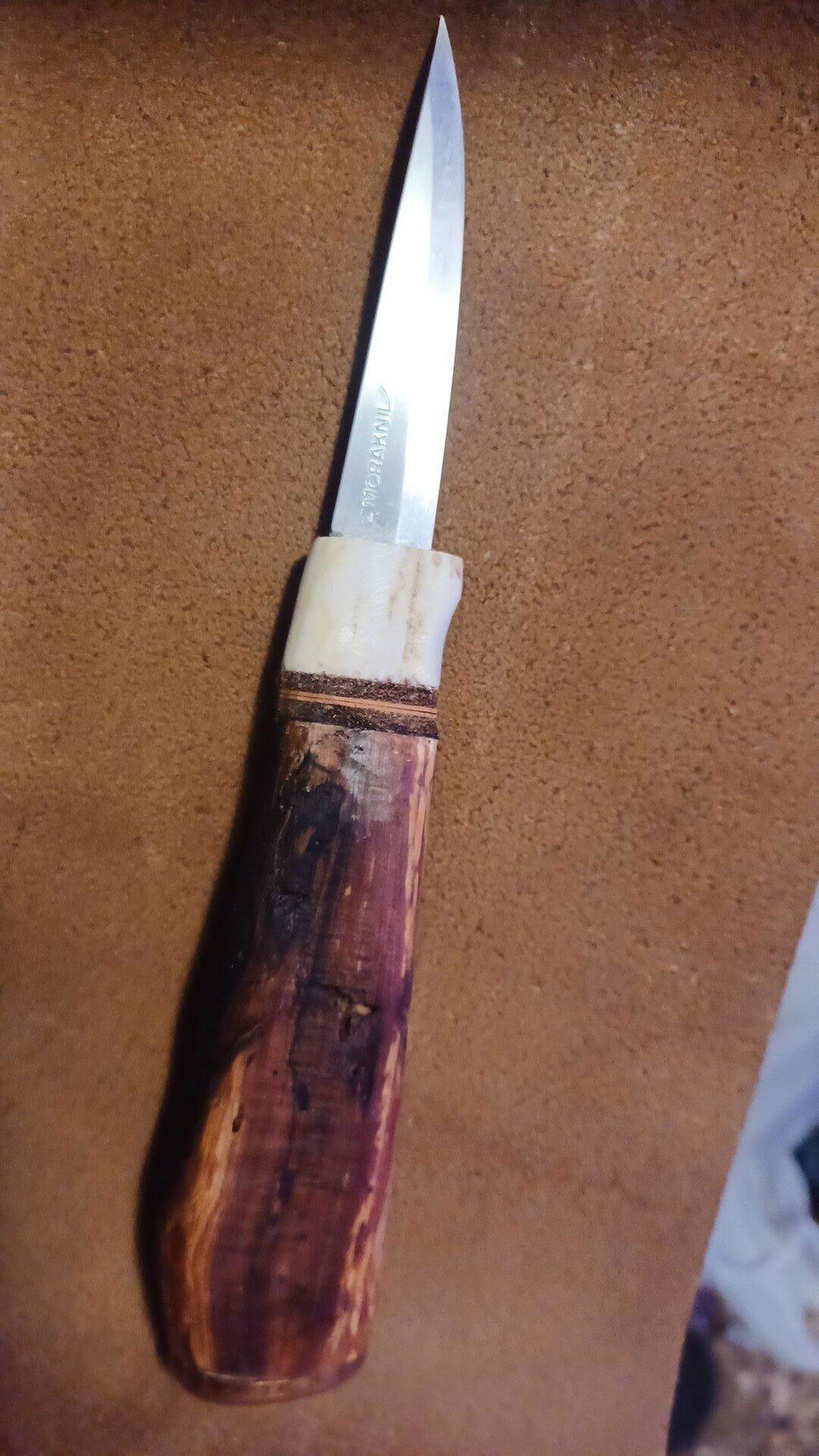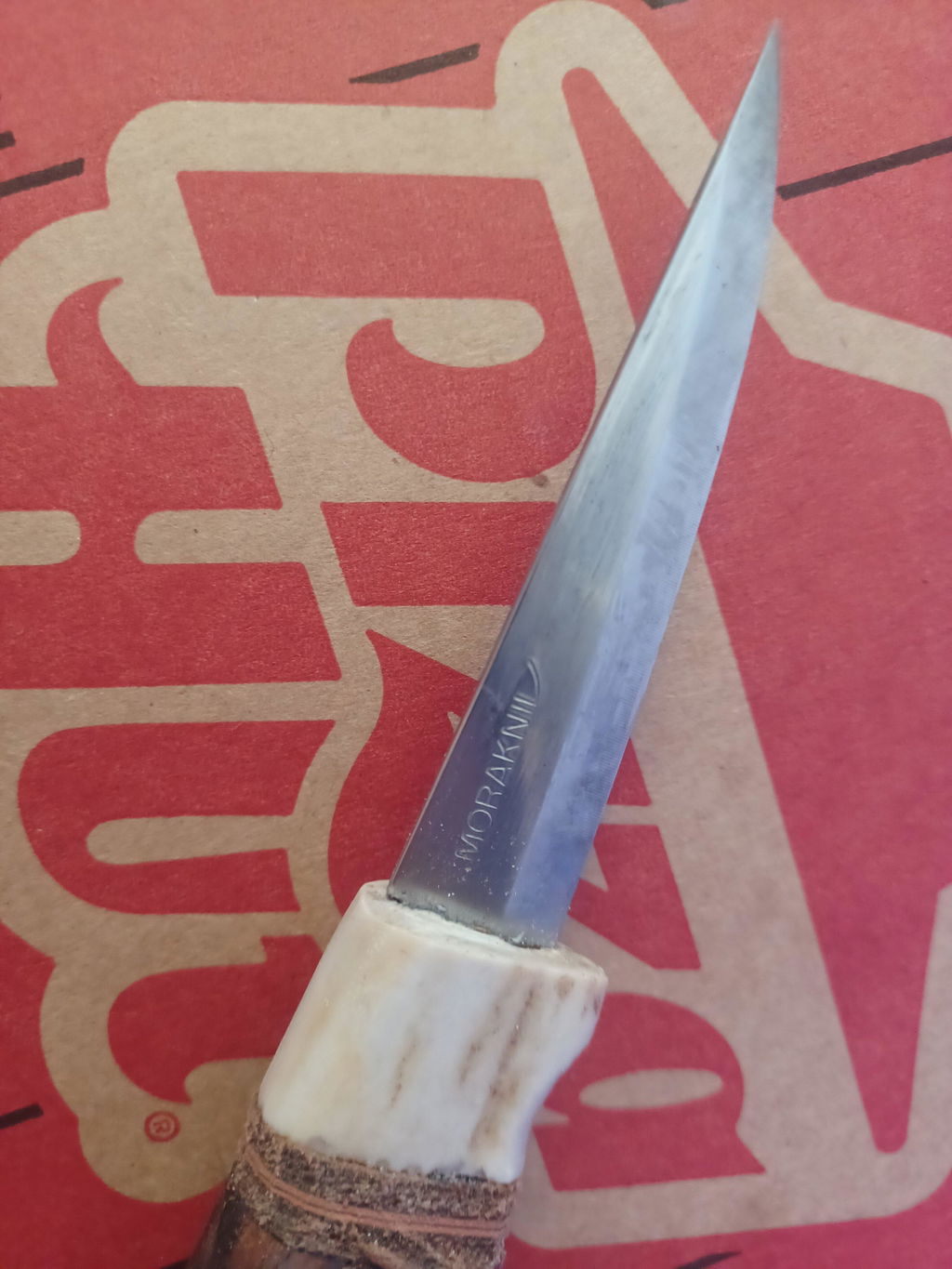
Choosing your first hunting knife can feel more complicated than it should.
Product descriptions are filled with steel names, blade grinds, tang construction, handle materials, and specialized features. Some knives are promoted as heavy-duty survival tools, while others are designed for one precise step in processing game.
A beginner does not need the largest, most expensive, or most technically advanced knife. A good first hunting knife should be comfortable, controllable, easy to maintain, and suited to the animals and tasks the hunter is most likely to encounter.
For most new hunters, that means starting with a medium-sized fixed blade, a secure handle, a practical sheath, and a blade shape that works well for field dressing, skinning, and general camp use. Once you gain experience, you can add more specialized tools for boning, butchering, caping, or processing larger game.
What makes a good hunting knife for beginners?
The best hunting knife for a beginner is usually simple.
It should feel secure in the hand, cut efficiently without excessive pressure, and be easy to clean after use. The blade should be long enough for field dressing and skinning, but not so long that it becomes difficult to control around organs, joints, or valuable meat.
A beginner-friendly hunting knife should generally offer:
* A fixed blade with a secure sheath
* A blade around 3.5 to 4.5 inches long
* A drop-point or moderately curved blade profile
* A comfortable, slip-resistant handle
* Stainless steel or an easily maintained carbon steel
* A straightforward edge that can be sharpened without specialized equipment
The knife should also match the hunter’s actual needs. A whitetail hunter processing deer in the field may need a different blade than someone hunting upland birds, rabbits, or elk.
For a deeper explanation of steel, blade grinds, heat treatment, and construction, read What makes a good knife: a practical guide for hunters, woodworkers, and outdoor enthusiasts.
Start with the game you plan to hunt
Before comparing knife steels or handle materials, consider what you will use the knife for.
A hunter pursuing rabbits, squirrels, birds, or other small game usually benefits from a short, narrow blade with a controllable point. A large knife can make delicate work more difficult and increase the chance of cutting too deeply.
For whitetail deer and similarly sized game, a medium fixed blade is often the most versatile choice. A blade around four inches provides enough cutting length for opening and skinning while remaining manageable around the chest cavity and joints.
Hunters processing elk, moose, or large wild hogs may prefer a slightly longer blade, but blade length alone does not make the work faster. Edge geometry, sharpness, handle comfort, and technique are usually more important than carrying an oversized knife.
Also consider where the animal will be processed. A hunter who only field dresses game before taking it to a professional processor needs fewer specialized tools than someone who skins, quarters, bones, and packages the entire animal at home.
Fixed blade or folding hunting knife?
A folding knife can be compact and convenient, but a fixed blade is generally the more practical choice for a beginner’s primary hunting knife.
Fixed-blade knives have no hinge or internal locking mechanism where blood, fat, hair, and tissue can collect. They are easier to rinse, inspect, and dry thoroughly after processing game. They also remain ready to use without requiring the hunter to open the blade while wearing gloves or working with wet hands.
A folding knife can still make a useful backup. It may handle light utility tasks, food packaging, cord, or small-game work. For regular field dressing and skinning, however, a fixed blade with a secure sheath is usually simpler and easier to maintain.
Ragweed Forge’s outdoor knives for beginners collection includes practical fixed blades selected for comfortable handling, control, and dependable field performance.
The best hunting knife blade length for beginners
Many first-time buyers assume that a bigger animal requires a very large knife. In practice, excessive blade length can reduce control.
For most beginner hunters, a blade between 3.5 and 4.5 inches is a useful starting point. This size provides enough edge for common field-dressing and skinning cuts while keeping the tip close enough to the hand for precise control.
A shorter blade can be better for small game, caping, or detailed work around joints. A longer blade may be useful for large animals, camp cooking, or slicing larger sections of meat, but it can feel awkward inside a body cavity.
Handle size matters as much as blade length. A compact blade with a handle that is too small may be difficult to control, especially when wearing gloves. The knife should allow a secure grip without forcing the hand into an uncomfortable position.
The goal is not to carry the most impressive knife. It is to carry a blade that can be guided safely through controlled cuts.
Choosing a hunting knife blade shape
Blade shape affects how easily the knife can open, skin, and process an animal.
Drop-point blades
A drop-point blade is one of the best all-around choices for a beginner. The spine curves gradually toward the point, creating a strong and controllable tip. The shape normally provides enough belly for skinning without placing the point too far above the centerline of the knife.
Drop-point knives are versatile enough for field dressing, food preparation, light carving, and general camp tasks. This makes them especially useful for beginners who want one knife rather than several specialized tools.
Skinning blades
A dedicated skinning knife usually has a more pronounced curve along the cutting edge. The long belly helps separate hide from meat with smooth, sweeping cuts.
The Mora Hunting Skinning Knife uses a stiff, curved stainless steel blade intended for even and controlled skinning cuts. Its friction-grip polymer handle and finger guard are designed to provide stability in wet field conditions. It can be an effective second knife for a beginner who has already selected a general-purpose field knife.
Clip-point blades
A clip-point knife has a finer, more pronounced tip. It can provide excellent precision, but the tip is usually less robust and may be easier for a beginner to push too deeply during field dressing.
Clip points can work well for detailed tasks, but a moderate drop point is often more forgiving as a first hunting knife.
Gut hooks
A gut hook is designed to open the hide and abdominal wall without directing the primary point toward the internal organs. Some hunters find this feature useful, while others prefer the control and simplicity of a conventional blade.
A beginner does not necessarily need a gut hook. A sharp, controllable drop-point knife and proper technique can perform the same basic task while being easier to sharpen and clean.
Stainless steel or carbon steel for a first hunting knife?
Both stainless and carbon steel can make excellent hunting knives. The better choice depends on how much maintenance the new hunter is willing to perform.
Stainless steel hunting knives
Stainless steel is often the easiest choice for a beginner. It offers greater resistance to rust and staining when exposed to blood, rain, snow, humidity, and repeated washing.
It still needs to be cleaned and dried, but it is generally more forgiving if field conditions prevent immediate maintenance. Stainless steel is especially practical for hunters in humid climates, wet forests, coastal regions, or areas with frequent rain and snow.
The Mora Kansbol Hunting is a purpose-built stainless steel hunting knife with a profile-ground blade and an ergonomic polymer handle. Its design combines general outdoor versatility with features intended for processing game, making it a practical option for someone who wants one manageable hunting and camp knife.
Carbon steel hunting knives
Carbon steel is valued for its cutting performance and straightforward sharpening. Many hunters appreciate the way it takes a fine edge and can be restored with simple sharpening tools.
The disadvantage is corrosion resistance. Carbon steel should be cleaned and dried promptly after contact with blood or moisture. It may also benefit from a thin protective coating during storage.
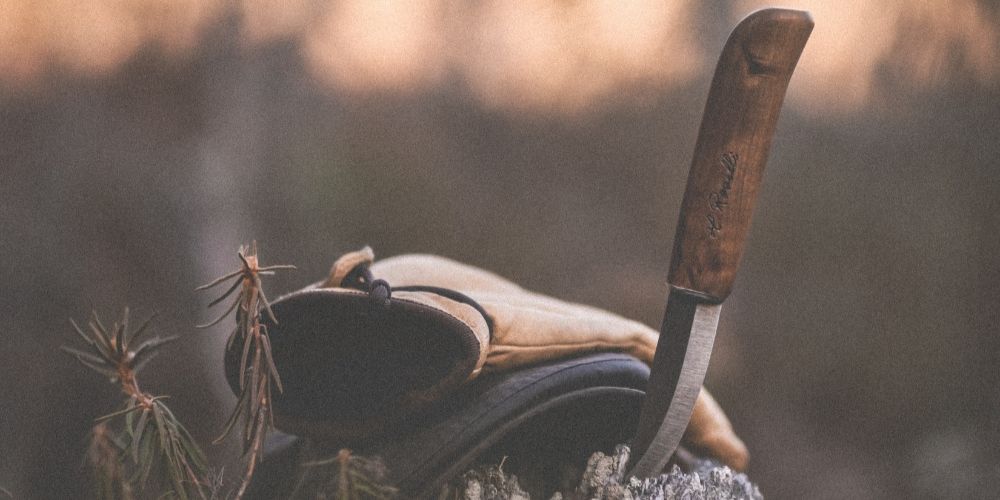
The Roselli Hunter R100 is a traditional Finnish hunting and wilderness knife made with a forged carbon steel blade and curly birch handle. Its simple construction and proven design make it an appealing long-term choice for a hunter prepared to care for a carbon steel blade.
For a more detailed comparison, see Carbon steel vs. stainless steel knives: which blade material is right for you?.
Why handle grip matters in a beginner hunting knife
A hunting knife is often used when the hunter’s hands are cold, wet, tired, or covered in blood and fat. The handle must remain secure without requiring an exhausting grip.
Polymer and rubberized handles are practical for beginners because they are easy to wash and often include textured or soft friction-grip surfaces. They are not easily affected by moisture and generally require little maintenance.
Wood handles provide warmth, comfort, and traditional appearance. A well-shaped wood handle can offer excellent control, but it should be dried after use and occasionally treated according to the manufacturer’s recommendations.
Whatever the material, avoid choosing a handle based only on appearance. Look for enough length to support the entire hand, a shape that indicates the direction of the cutting edge, and a surface that does not become dangerously slick.
A finger guard can provide extra confidence for a beginner, especially when the knife is used with a pushing motion. However, handle shape and technique remain more important than the size of the guard.
Does a beginner need a full-tang hunting knife?
Full-tang construction means that the blade steel extends through the length and width of the handle. It can provide additional strength when the knife is used for demanding outdoor work.
However, a full tang is not essential for normal field dressing, skinning, or meat processing. Traditional stick-tang Scandinavian knives have been used successfully by generations of hunters.
A beginner should choose full-tang construction when the knife will also be used for rough camp tasks, heavy carving, or limited wood processing. Hunters carrying a separate camp knife or hatchet may prefer a lighter hunting knife optimized for cutting performance and control.
Do not use any hunting knife as a pry bar, digging tool, or substitute for a saw or axe. Even a thick full-tang blade can be damaged by twisting and side pressure.
Blade grind and sharpening for beginners
The grind describes how the blade becomes thinner from the spine toward the cutting edge. It affects slicing ability, durability, and sharpening.
A Scandinavian, or Scandi, grind has a broad visible bevel that runs directly toward the edge. It is popular in Nordic outdoor knives and provides a clear reference surface during sharpening. It also performs well for carving, woodwork, and general outdoor use.
A full flat grind becomes gradually thinner from the spine toward the edge. It can move efficiently through hide and meat because there is less material creating resistance behind the edge.
The Mora Hunting Amberg Full Flat uses a full flat grind, a stiff 4.25-inch stainless steel blade, a finger guard, and a TPE handle. It is designed for skinning, field dressing, game processing, outdoor cooking, and light carving, making it a strong option for beginners seeking a dedicated hunting knife with broad utility.
The exact grind matters less than learning to maintain it correctly. A beginner should be able to identify the sharpening angle, remove a burr, and restore a practical working edge before relying on the knife in the field.
The beginner’s knife sharpening guide explains stones, sharpening angles, burr formation, and stropping.
One all-around hunting knife or a specialized set?
Most beginners should start with one versatile fixed blade.
An all-around knife reduces the amount of equipment carried and allows the hunter to develop consistent technique. A medium drop-point or moderately curved blade can handle opening, field dressing, basic skinning, food preparation, and many light camp tasks.
After gaining experience, the hunter may add specialized knives:
* A curved skinning knife for separating hide
* A narrow boning knife for joints and tight spaces
* A longer butcher knife for trimming and portioning meat
* A compact caping knife for detailed trophy work
* A separate utility knife for rope, packaging, and camp chores
Hunters who plan to process their own game from the beginning may prefer a ready-made set. The Mora Hunting Kit includes two hunting knives, a sharpening steel, and a storage case. Ragweed Forge describes it as a complete game-processing selection and a suitable starter kit for beginners.
Beginner-friendly hunting knife options
The right first knife depends on budget, intended use, and how specialized the hunter wants the blade to be.
A versatile and affordable first field knife
The Mora Companion FxF Orange is a straightforward stainless steel outdoor knife with a blade just over four inches long, a finger guard, a TPE handle, and a polymer sheath. Its high-visibility orange color makes it easier to locate if it is set down in leaves, grass, or snow.
The Companion is not a specialized game-processing knife, but it can be a sensible option for a beginner learning basic knife handling, performing general camp tasks, or carrying an affordable backup.
A versatile hunting and outdoor knife
The Mora Kansbol Hunting is a more hunting-focused option. Its stainless steel blade includes a thinner profile near the forward cutting curve, while the barrel-shaped polymer handle provides a soft friction grip.
It suits a beginner who wants a single knife for field dressing, outdoor food preparation, and general use without moving immediately into a more expensive traditional knife.
A dedicated first hunting knife
The Mora Hunting Amberg Full Flat is a purpose-built hunting knife for skinning, field dressing, and processing game. Its stainless steel, full flat grind, secure synthetic handle, and washable polymer sheath create a practical package for a new hunter.
A traditional hunting knife to grow into
The Roselli Hunter R100 offers a more traditional experience. Its forged carbon steel blade, curly birch handle, and handmade leather sheath require more care than a synthetic-handled stainless knife, but the design has been used for hunting and wilderness work for decades.
It can be a good choice for someone who wants to learn carbon steel maintenance and appreciates traditional Finnish knife construction.
Common mistakes when buying a first hunting knife
One of the most common mistakes is choosing a knife that is unnecessarily large. A long, heavy blade may look capable, but it can reduce precision and become tiring during detailed work.
Another mistake is buying a specialized skinning or boning knife as the only field blade. Specialized tools perform their intended jobs well, but they may be less useful for opening, general cutting, food preparation, or camp tasks.
Beginners may also focus too heavily on steel specifications. Premium steel does not compensate for an uncomfortable handle, poor blade geometry, or an unsuitable shape.
Other common mistakes include:
* Choosing appearance over grip and control
* Ignoring the quality and security of the sheath
* Buying a difficult-to-maintain steel without sharpening equipment
* Using a fine hunting edge to chop bone or split wood
* Storing the knife wet or dirty inside its sheath
* Waiting until hunting season to practice using and sharpening the knife
A simple knife that you understand and maintain is more useful than an expensive knife you are afraid to use.
How to care for your first hunting knife
Clean the knife as soon as practical after processing game. Use warm water and mild soap when appropriate, remove all visible residue, and dry the blade and handle thoroughly.
Do not leave a wet knife inside a leather sheath. Leather can retain moisture against the blade and may cause rust, staining, or damage to the sheath itself. Allow both components to dry separately before storage.
Carbon steel blades may need a light coating of knife-safe oil. Wooden handles may benefit from occasional oil or wax, while polymer handles generally need only cleaning and inspection.
Check the edge before each trip. A sharp knife cuts with less pressure and is easier to control than a dull one. Touching up the edge regularly is usually faster and easier than restoring a severely dull blade.
Ragweed Forge’s guide to knife handle and sheath care covers maintenance for wood, leather, and synthetic materials.
You can also review How to sharpen a knife: Redbeard’s favorite sharpening tools for practical sharpening and stropping recommendations.
A simple checklist for choosing your first hunting knife
Before buying, ask yourself a few practical questions.
What game will I hunt most often? Will I only field dress the animal, or will I also skin and process it? Do I want a low-maintenance stainless steel blade or am I prepared to care for carbon steel? Does the handle remain secure when my hands are wet? Can I sharpen the blade myself? Does the sheath protect the edge and keep the knife securely attached to my belt or pack?
For most beginners, the answer will point toward a medium fixed blade with a comfortable synthetic handle and stainless steel construction. A purpose-built model such as the Mora Kansbol Hunting or Mora Hunting Amberg provides useful hunting performance without unnecessary complexity.
Hunters who prefer traditional materials and are willing to perform regular maintenance may instead choose a carbon steel knife such as the Roselli Hunter.
The first knife does not need to handle every possible hunting task. It needs to help the new hunter work safely, learn good technique, and understand which features will matter most in the future.
Explore the to compare fixed-blade hunting knives, Scandinavian outdoor knives, field-processing tools, and practical blades for camp use.
<