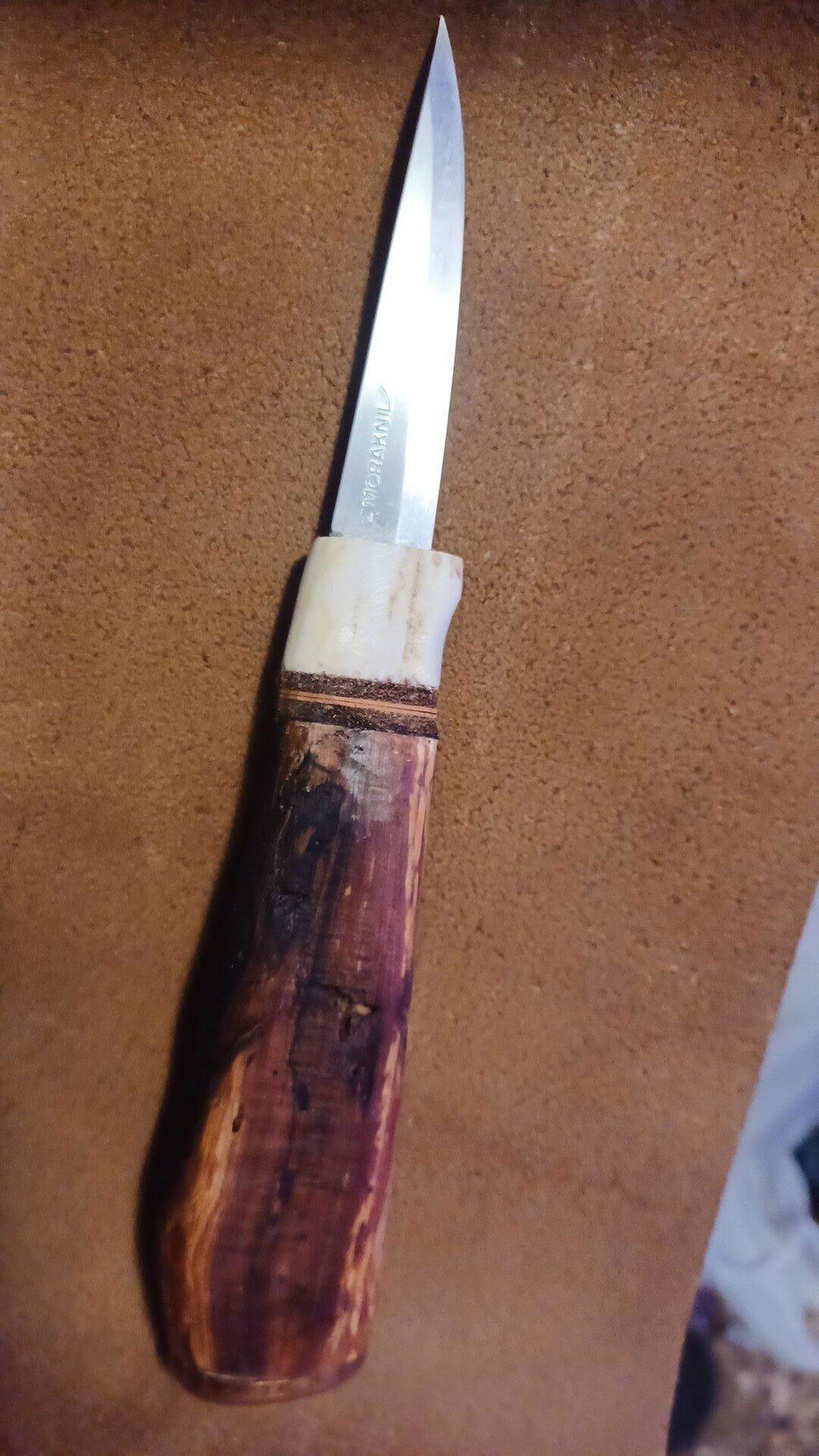
There is a certain kind of Scandinavian tool that does not need much explaining once you put it to work.
The design is simple. The materials are chosen for a reason. There are no unnecessary features competing for attention. The tool is expected to cut, carve, chop, or saw well and keep doing it.
That practical philosophy is one of the reasons Scandinavian knives and axes have been at the heart of Ragweed Forge for decades.
It is also what makes G-Man saws such a natural fit here.
Made in Edsbyn, Sweden, G-Man produces saws for forestry, pruning, outdoor use, carpentry, construction, and professional trades. At Ragweed Forge, our G-Man saw collection ranges from compact folding saws to traditional bow saws, pruning saws, replacement blades, and professional hand tools.
They are not tools designed to spend their lives hanging on a wall.
They are built to work.
A Swedish approach to practical tools
Ragweed Forge has always had a strong connection with Scandinavian tools.
Our history began with a search for knives that combined traditional design, practical performance, and reasonable prices. That search led Ragnar through Sweden, Norway, Finland, Denmark, and Germany and helped establish the selection of Scandinavian knives Ragweed Forge is still known for today.
You can read more about that story in Welcome to Ragweed Forge.
G-Man fits into that same tradition.
The company's saws are manufactured in Edsbyn, Sweden, and the range reflects a tool-making culture where forests, timber, and outdoor work are part of everyday life.
Rather than building one saw and trying to make it suitable for every task, G-Man offers different blade lengths, tooth patterns, frames, and saw styles for different types of work.
That matters because cutting green branches is not the same job as cutting dry hardwood. Pruning a tree is different from bucking campfire wood. A folding saw carried in a backpack serves a different purpose than a 24-inch frame saw used around a property.
The tool should match the work.
Folding saws for camp, trail, and bushcraft
For many Ragweed Forge customers, the easiest introduction to G-Man is one of its folding saws.
The G-Man PX 237 folding pruning saw is designed around green timber and fresh branches. It is available with either a compact 7-inch blade or a larger 10-inch blade, giving users a choice between maximum portability and greater cutting capacity.
The G-Man PX 239 folding saw takes a similar format but uses a finer tooth pattern better suited to dry timber and hardwood.
For campers, hunters, and bushcrafters, that means the decision does not have to begin with a brand comparison.
Start with the wood you actually expect to cut.
Then choose the saw built for it.
Our guide to the best folding saw for bushcraft explains the differences in blade size, tooth geometry, locking mechanisms, and field use in more detail.
If you are deciding between the two common blade lengths, see What size folding saw do you need? 7" vs. 10" saw blades.
Bow saws are still hard to beat for serious wood processing
Modern outdoor gear tends to favor increasingly compact equipment, but there is a reason the bow saw has remained useful for generations.
A simple tensioned frame and long replaceable blade make an extremely efficient wood-processing tool.
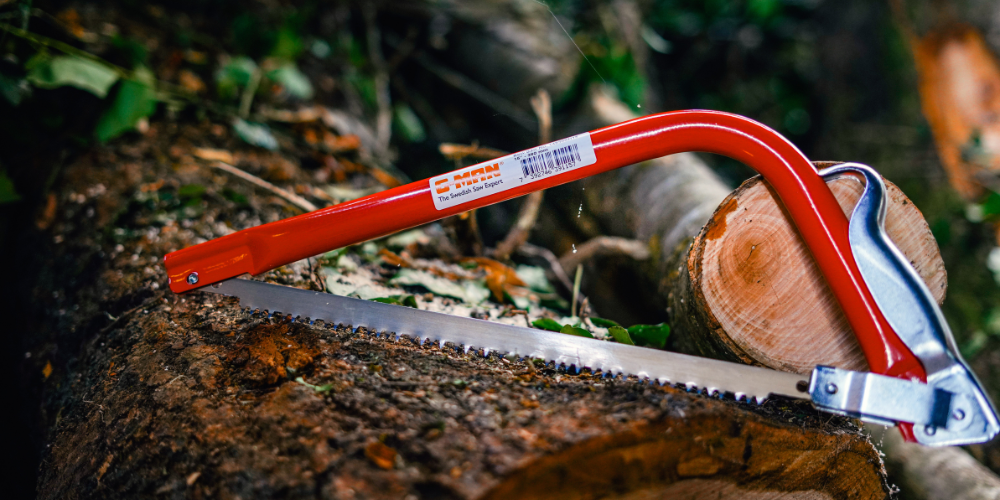
For camping and bushcraft, the G-Man 149 Mini 15-inch bow saw is an interesting middle ground between a pocketable folding saw and a full-size forestry saw.
Its compact frame is easier to transport than a traditional large bow saw, but the 15-inch blade provides a longer cutting stroke for campfire wood, branches, trail work, and general outdoor use.
The G-Man 147 21-inch bow saw moves further toward serious wood processing. Its taller frame provides clearance for larger logs and branches and makes it a useful tool for camps, cabins, property maintenance, and clearing work.
For larger jobs, the G-Man 140 24-inch bow saw provides even more stroke length while retaining a lightweight steel frame.
If you are unsure whether a compact folding saw or frame saw belongs in your kit, our guide to choosing between a folding saw and a bow saw walks through the differences.
One frame, different blades, different jobs
One of the most practical features of a traditional bow saw is that the blade can be replaced or changed to match the material being cut.
That gives a relatively simple tool far more versatility than its appearance suggests.
The G-Man 140 bow saw, for example, is designed around interchangeable blade options for different types of timber.
For fresh, green material, Ragweed Forge carries the G-Man G30SH bow saw blade, available in lengths from 15 inches through 36 inches.
Instead of replacing the complete saw when the blade eventually wears or when your cutting needs change, the frame can continue working with the appropriate replacement blade.
It is an old-fashioned idea in the best possible sense: maintain the tool and replace the part that actually wears.
G-Man is not only an outdoor saw company
Bushcraft and camping may be the most obvious connection with Ragweed Forge, but G-Man's range extends beyond the woods.
The G-Man 343H 12-inch pruning saw is designed for controlled work around branches and dense growth.
The G-Man 232H pruning saw pairs a curved 14-inch blade with a traditional wooden handle for pruning fresh timber and larger limbs.
For workshop and jobsite use, the G-Man 12-inch hacksaw is designed to work with both wood and metal cutting blades.
This broader range says something important about the brand.
These are not outdoor lifestyle products that happen to include a cutting edge. G-Man is making saws as working tools for people who actually need to cut material.
That same practical foundation is part of what makes the outdoor models interesting.
Why tooth design matters
A saw is much more than a strip of steel with sharp points along one edge.
Tooth size, spacing, geometry, blade thickness, and blade tension all affect how a saw behaves.
A blade designed to clear wet fibers and chips from fresh wood may use a different tooth pattern from one intended to track smoothly through dry timber.
The same applies to metalworking. Thin material generally requires more teeth engaged in the cut, while thicker material can use a coarser configuration.
That is why G-Man offers different blades rather than pretending one tooth pattern will perform equally well everywhere.
For outdoor users, one of the most useful distinctions is between green and dry wood. Our guide to choosing a saw blade for green wood vs. dry wood explains why the condition of the timber can be just as important as the size of the saw.
Why G-Man belongs at Ragweed Forge
We have never been interested in stocking tools simply because they are fashionable.
Ragweed Forge was built around useful Scandinavian knives that ordinary people could actually carry and use. The goal was never to create a collection of untouchable objects.
The goal was to find good tools.
That is still how we look at our selection today.
A well-made Scandinavian knife, an axe, and a saw share a common philosophy. Each is relatively simple. Each performs a specific type of work extremely well. And each becomes more valuable when you learn how and when to use it.
For someone building an outdoor cutting kit, a saw also fills a gap that even an excellent knife cannot.
A knife excels at carving, feather sticks, food preparation, and controlled cutting. An axe excels at splitting and chopping. A saw cuts cleanly across wood fibers and turns branches or small logs into manageable lengths with very little wasted effort.
Use the saw to cut the wood.
Use the axe to split it.
Use the knife for the finer work.
If you are building that kind of system, you can pair G-Man saws with the Roselli axe collection or explore our guide to choosing a camping knife.
Which G-Man saw should you start with?
For someone who wants a compact saw for a backpack, camp kit, or hunting bag, one of the PX folding saws is the logical place to begin.
Choose the PX 237 if fresh branches and green wood make up most of your work. Look toward the PX 239 if you expect to spend more time cutting dry and seasoned timber.
If you regularly process larger quantities of firewood, a bow saw is likely to be more efficient. The 15-inch Mini is easy to transport, while the 21-inch and larger frames give you increasing capacity for camp, property, and forestry work.
For pruning and property maintenance, G-Man's fixed pruning saws provide longer curved or straight blades without the extra structure of a frame saw.
There is no single G-Man saw that is best for every person.
That is part of the appeal.
Choose the tool according to the work.
Swedish tools made to be used
Good outdoor tools do not have to be complicated.
They need to feel right in the hand, perform their intended job efficiently, and be dependable enough that you reach for them again the next time there is work to do.
That is the role G-Man fills in the Ragweed Forge lineup.
Swedish saws for cutting wood, clearing branches, maintaining property, preparing campfires, and doing the ordinary work that keeps a good tool from ever becoming just a display piece.
Explore the G-Man Swedish saw collection at Ragweed Forge and find the saw that fits the work you actually do.