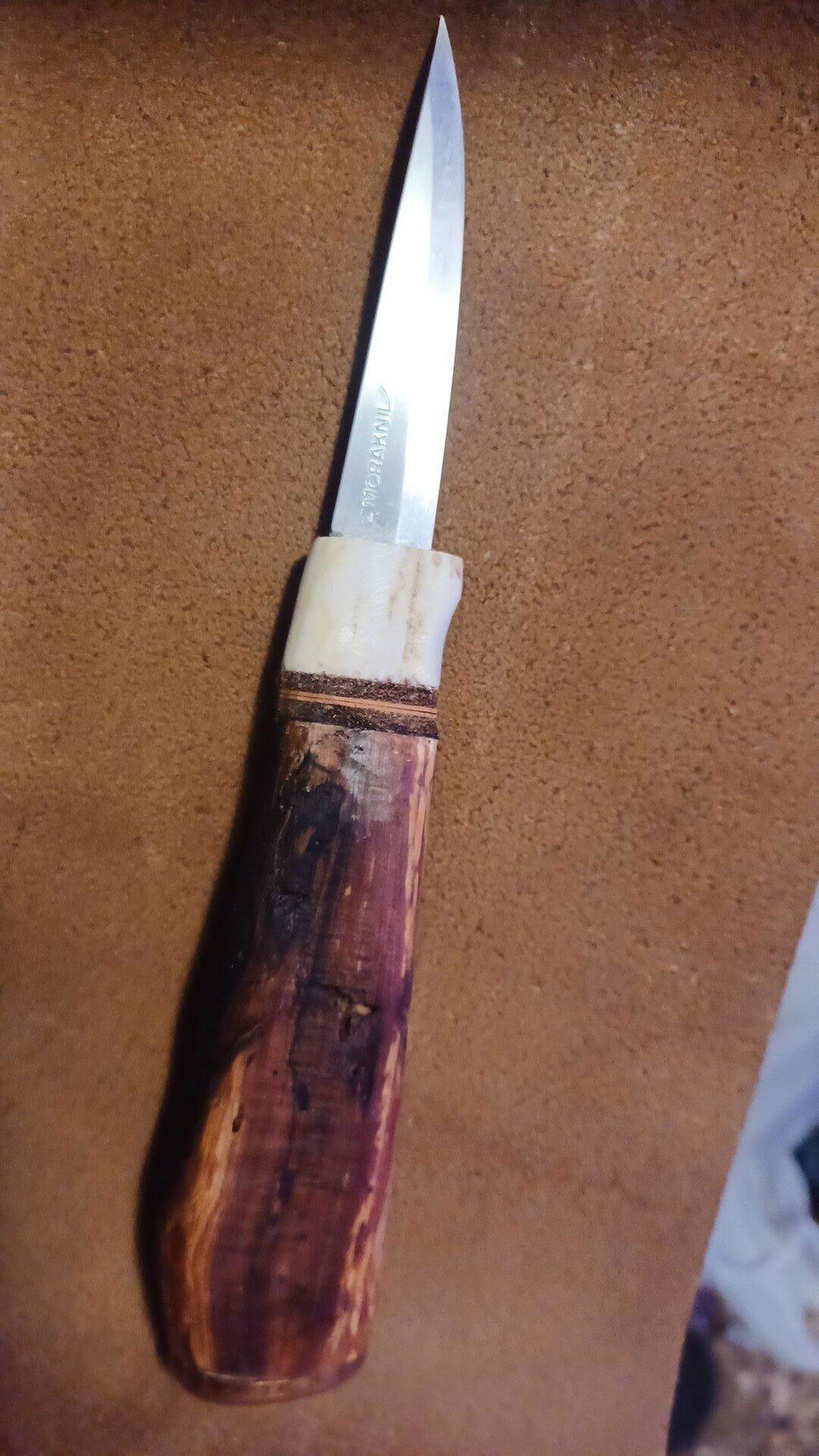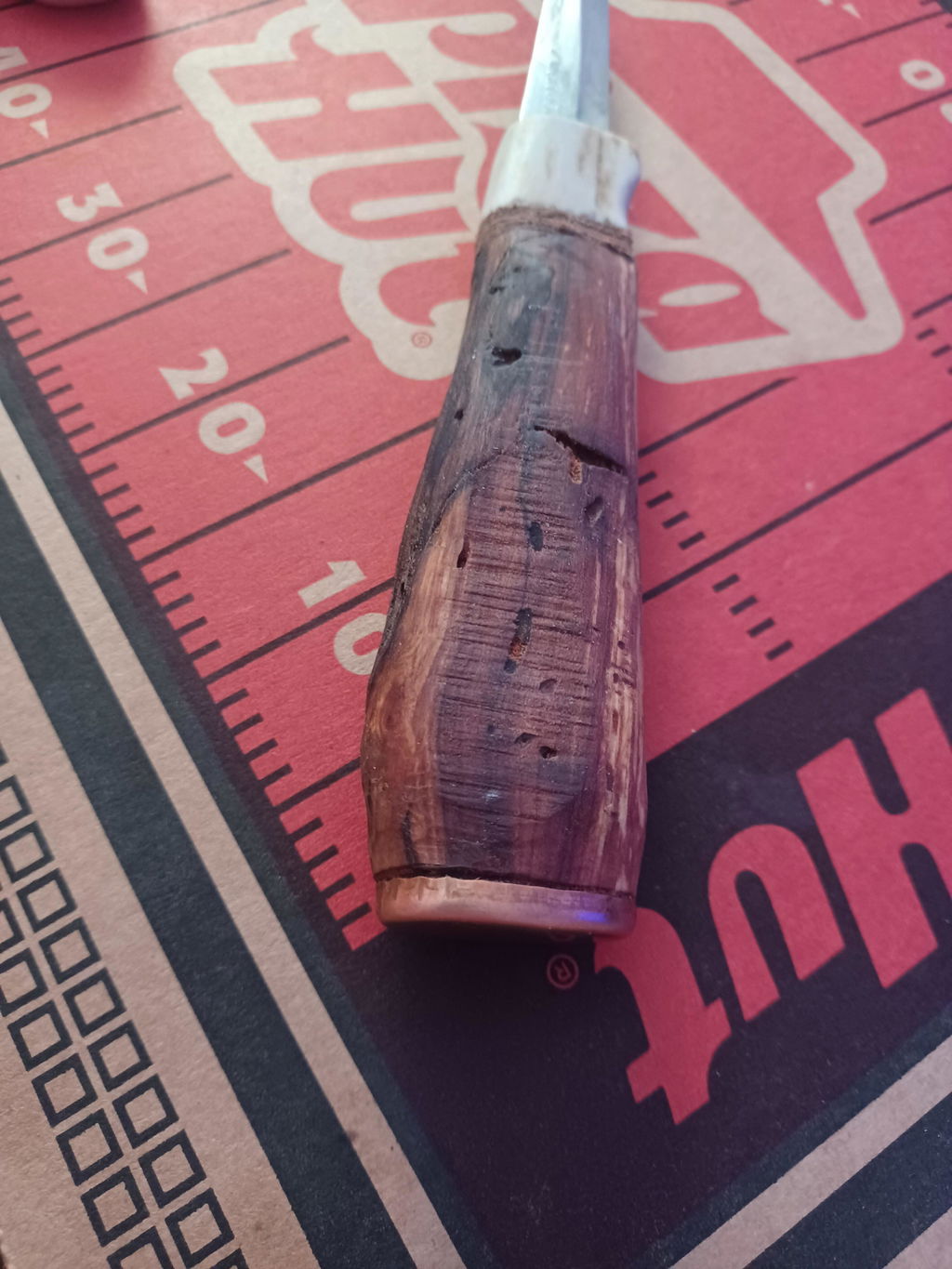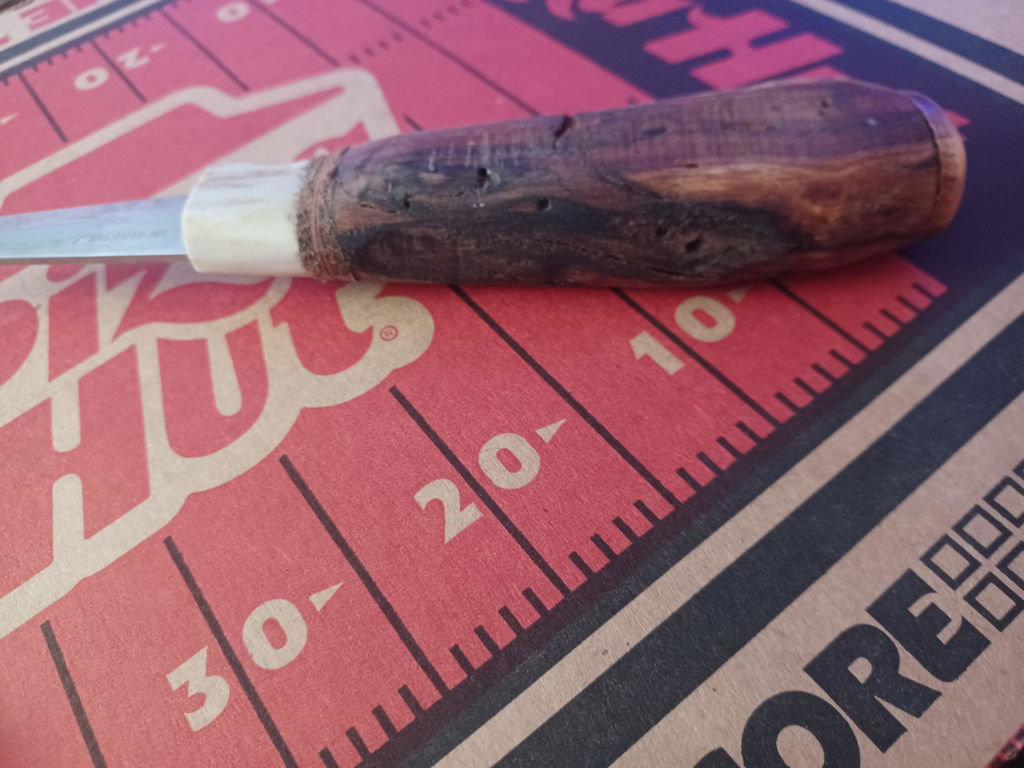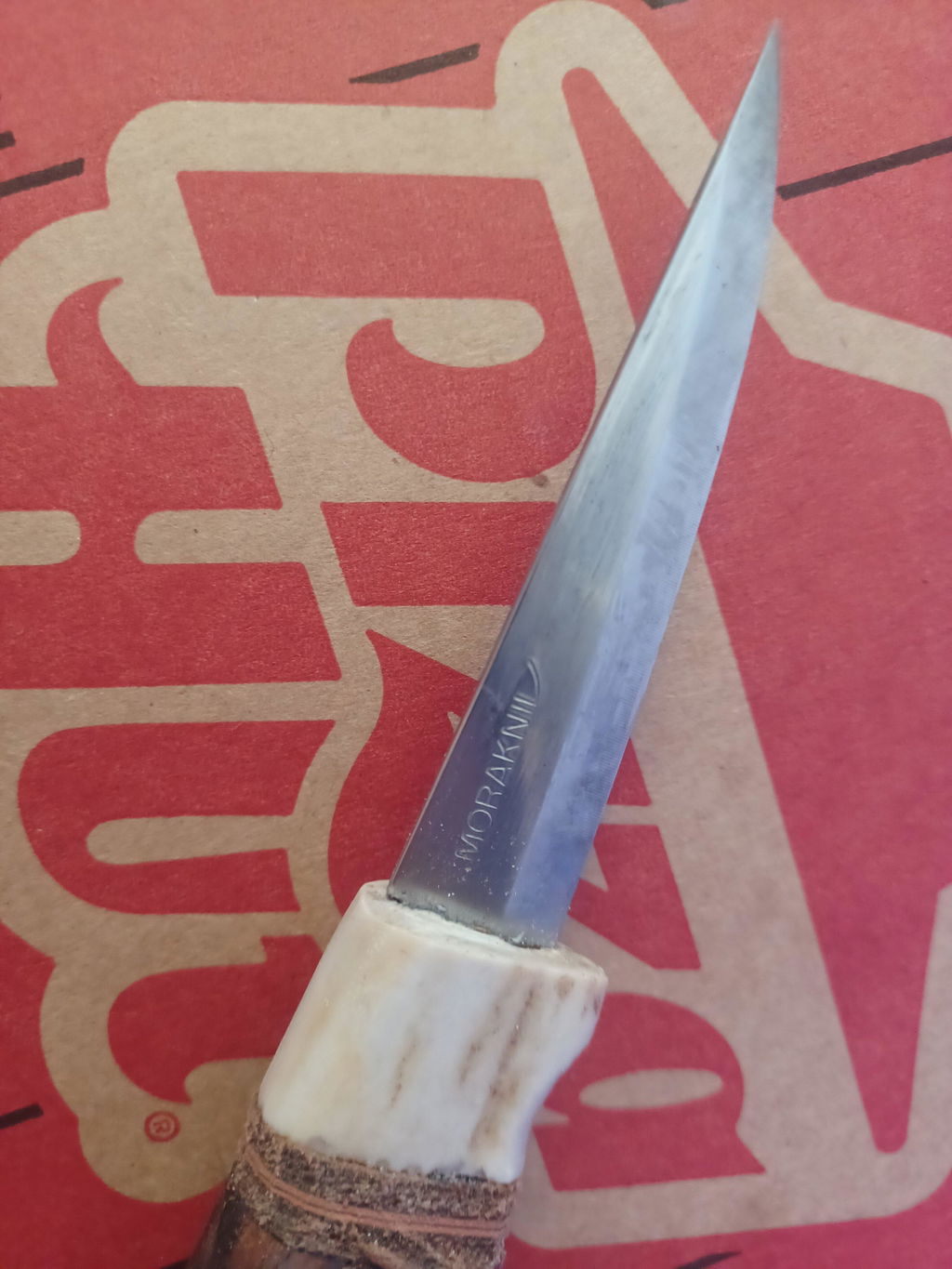
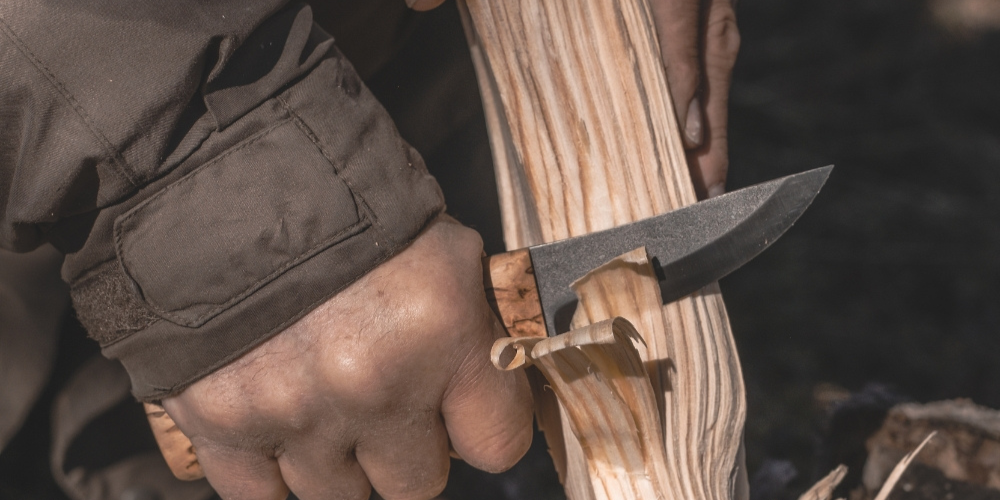
The puukko is one of the simplest knife designs you can carry into the woods.
That simplicity is also what makes it difficult to explain with a checklist.
A puukko is not defined by one exact blade length, one steel, or one handle shape. It is a traditional Finnish utility knife that developed around everyday work: cutting wood, preparing food, hunting, fishing, working around the farm, and handling the small cutting jobs that appear throughout daily life.
Rather than being designed as a modern “survival knife,” the puukko is a practical cutting tool first.
That philosophy is one reason Finnish and other Scandinavian knives continue to appeal to bushcrafters, woodcarvers, hunters, and outdoorsmen in the United States.
At Ragweed Forge, many of the knives we carry from Finnish makers follow this same tradition of simple geometry, practical materials, and controlled cutting.
What does “puukko” mean?
Puukko is the Finnish word for this traditional style of knife.
There is no single specification that every puukko must follow, but traditional examples share a recognizable family resemblance.
They are normally fixed-blade knives with relatively compact blades, comfortable handles, and practical edge geometry. Natural handle materials such as birch and curly birch are common, and many traditional models are carried in deep leather sheaths.
Most importantly, the design is focused on cutting performance.
A puukko does not need an extremely thick blade or oversized guard to be useful in the outdoors. Instead, it relies on good edge geometry, a comfortable grip, and a blade size that allows precise control.
A knife developed around everyday work
The puukko belongs to a culture in which a knife was historically an everyday working tool.
Wood needed to be shaped. Cordage needed to be cut. Fish and game had to be processed. Food had to be prepared. Equipment needed repair.
A compact knife that could be carried comfortably and maintained easily made sense.
That practical heritage still influences Finnish knife design today.
Modern puukkos may use new steels or updated manufacturing methods, but the core idea remains recognizable: give the user a sharp, controllable blade and remove unnecessary complexity.
This philosophy also fits closely with the way Ragweed Forge selects Scandinavian knives. You can read more about that approach in Scandinavian knives chosen by experience, not trends.
What does a traditional puukko look like?
There is plenty of variation, but several characteristics appear frequently.
The blade is generally compact enough for close control. Many examples use a straight spine or a simple profile without dramatic curves or aggressive points.
A Scandinavian-style grind is common because it produces an efficient edge for wood carving and general cutting.
Handles are often made from natural materials and shaped to fill the hand without complicated finger grooves. Traditional puukkos may have little or no prominent finger guard.
The sheath is another important part of the design.
Deep pouch-style leather sheaths hold much of the knife securely while allowing it to ride comfortably from a belt.
These characteristics are not rules. Finnish makers have interpreted the puukko in many different ways over generations.
What connects them is the focus on practical use.
Why are puukko knives so good for wood carving?
Woodworking is one of the areas where the puukko design makes immediate sense.
A compact blade keeps the cutting edge close to the hand. That helps when carving notches, making feather sticks, shaping wooden objects, or working on traditional camp projects.
The Scandi-style grind found on many Nordic knives also cuts wood efficiently.
Instead of forcing a thick wedge of steel through the material, the geometry creates a keen cutting edge that can follow the grain with relatively little resistance.
That same broad bevel can provide a useful reference while sharpening.
Ragweed Forge carries a wide selection of Scandinavian carving knives, including traditional Finnish and Swedish designs that show how closely outdoor knife traditions and woodworking overlap.
Is a puukko the same as a bushcraft knife?
Not exactly.
A puukko can be an excellent bushcraft knife, but “bushcraft knife” is a much broader modern category.
Many contemporary bushcraft knives are heavier than traditional puukkos. They may have full-width exposed tangs, thick blade stock, synthetic handles, large guards, or construction intended for demanding wood processing.
Traditional puukkos generally take a lighter approach.
They are primarily cutting tools.
That makes them extremely capable for carving, feather sticks, food preparation, camp chores, and other controlled knife work. They are not intended to replace a hatchet, saw, pry bar, or splitting wedge.
If you need to process substantial firewood, pairing a puukko with an axe or camp saw is usually more efficient than making the knife unnecessarily heavy.
The role of the Scandi grind
The Scandinavian grind is one of the most recognizable features associated with Nordic outdoor knives.
Instead of using a narrow secondary edge bevel, a typical Scandi-ground blade has a relatively wide primary bevel that descends toward the cutting edge.
This geometry works particularly well in woodworking because the bevel helps guide the blade through the cut.
It is also approachable to sharpen.
The broad bevel can be placed against a sharpening surface, giving the user a physical reference for the sharpening angle.
This does not mean every puukko uses exactly the same grind. Makers change bevel angles and blade geometry depending on the knife's intended use.
But the connection between puukko design, woodworking, and Scandinavian edge geometry is one of the reasons the style remains so popular among modern bushcrafters.
Carbon steel and the Finnish knife tradition
Carbon steel remains common in traditional Finnish knives.
It can take a keen edge, is generally responsive to sharpening, and works extremely well in carving and outdoor cutting tools.
The tradeoff is corrosion.
Carbon steel should be cleaned and dried after use, particularly after exposure to rain, food, or other moisture. Over time, the blade may develop a natural patina.
Many users see that patina as part of the character of a working knife.
Stainless puukkos also exist and can be a good option when lower maintenance is more important.
Neither choice changes the basic philosophy of the knife.
Finnish curly birch handles
Natural wood is another feature commonly associated with traditional Finnish knives.
Curly birch in particular appears frequently because it combines practical handle properties with distinctive grain patterns.
Each piece looks slightly different.
That natural variation means two otherwise identical knives can develop their own character.
Wooden handles also feel different from molded synthetic handles. They tend to warm quickly in the hand and can remain comfortable during longer carving sessions.
They do require some basic care.
Our guide to curly birch handles and wood handle care explains what natural variation to expect and how to maintain these handles over time.
Finnish puukko makers at Ragweed Forge
One of the best ways to understand the puukko is to compare how different Finnish makers interpret the same basic tradition.
Ahti
Ahti produces straightforward Finnish knives designed around practical outdoor use.
Models such as the Ahti Korpi and Metsa demonstrate the traditional approach well: manageable blades, natural handles, uncomplicated construction, and a focus on carving and everyday cutting.
They are especially interesting for someone buying a first traditional Finnish outdoor knife.
Roselli
Roselli takes the Finnish working-knife tradition in a more handcrafted direction.
The company is known for forged carbon steel, curly birch handles, leather sheaths, and knives built for hunting, carving, and outdoor use.
You can explore the broader Roselli selection at Ragweed Forge or read more about Roselli knives and Finnish craftsmanship.
Kauhavan Puukkopaja
Kauhava has a particularly strong connection to Finnish puukko-making tradition.
Kauhavan Puukkopaja produces knives that combine practical blade geometry with traditional materials and decorative details.
Some examples lean toward working knives while others highlight the craft and visual heritage of Finnish knife making.
Wood Jewel
Wood Jewel makes knives in Finnish Lapland and combines practical blades with distinctive natural handles.
Curly birch and reindeer antler are common materials, producing knives that clearly reflect the landscape and craft traditions of northern Finland.
Browse the Wood Jewel collection to see another interpretation of Finnish knife making.
Is a puukko good for beginners?
Yes, as long as the user understands what the knife is designed to do.
A puukko is an excellent way to learn controlled knife skills.
Its compact blade makes it useful for basic carving, feather sticks, food preparation, and other normal camp tasks.
A Scandi-style grind can also make edge maintenance more approachable.
What a beginner should not do is treat a traditional puukko like an indestructible survival tool.
Do not pry with it. Do not twist it inside wood. Do not use the spine or handle as a hammer unless the knife was specifically designed for that purpose.
Use the knife as a knife and allow a saw or axe to handle heavier wood processing.
Our guide to bushcraft knife brands for beginners also looks at Ahti, Roselli, Mora, Helle, and other Nordic options if you are choosing your first outdoor knife.
Why the puukko still works
The basic tasks have not changed very much.
Campers still make feather sticks. Hunters still need controlled cuts. Woodworkers still shape material by hand. People still need a knife for the hundred small jobs that appear outdoors.
The puukko continues to work because it was designed around those tasks rather than around a trend.
A sharp blade.
A comfortable handle.
A secure sheath.
Enough knife to perform real work without carrying more than you need.
For anyone interested in Scandinavian outdoor skills, bushcraft, carving, or traditional craftsmanship, a Finnish puukko is more than a historical design.
It remains a remarkably practical tool.
Explore outdoor knives and Scandinavian tools at Ragweed Forge, or browse the carving collection if woodworking is your main focus.